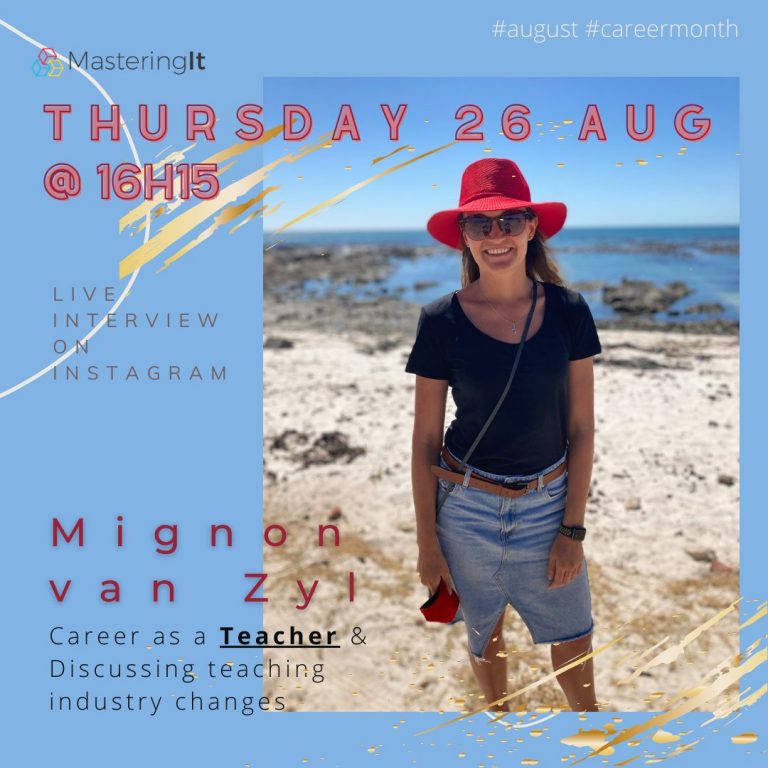

Career as a Teacher

Mignon’s career journey begins in South Africa, where she studied journalism. Thereafter she did a CELTA course which enabled her to move to Hannoi, Vietnam and teach english there. During her time there she discovered her passion for teaching, and so she began working with Teach Beyond (https://teachbeyond.org/) when she returned to South Africa. During her time with Teach Beyond, Mignon wasn’t as involved in the teaching aspect, and she realised that she really wanted to be! Mignon now teaches at Grace Hill College (https://www.gracehillcollege.co.za/), a private Christian school in George, based on Charlotte Mason’s philosophy of holistic education. Mignon teaches English, zoology and geography to intermediate phase students (Grades 4-6). She is also currently studying part-time towards her PGCE via the Cornerstone Institute.A typical day as a teacherMignon gets to school around 07:00. Half an hour later the children arrive, and the classes take register and pray or do bible study before classes begin. While there are breaks, teachers are often on duty during these breaks. School ends around 14:00, but the teachers usually have work to do afterwards, including prep for the following day, catching up on admin work, marking papers, books or assignments, as well as coaching or supervising extra curricular activities. After this long day, Mignon still studies in her free time.What are the different routes to become a teacher?Essentially there are two main routes:
  1. A Bachelor of Education degree.This is 4 years long, during which you will do theory and practicals.
  2. After doing a bachelor’s degree or three-year diploma (in any industry) evaluated at NQF level 6 (according to the old structure) or NQF level 7 (according to the new structure) (360 credits in total), you can do a PGCE course. The degree or diploma you have completed must include at least two school-related subjects. There are options to do this course in 1, 2, or even 3 years, depending on your time constraints.
Career tips for someone wanting to enter the education field
  • Job shadowing. Shadow in a variety of classes, schools, age groups in order to gain a broader understanding of the education field and where you might like to fit into it.
  • Speak to teachers so that you have a realistic understanding of what the job entails.
Impact of Covid on educationCovid has hugely disrupted the education industry.
    • Many things have gone online. This may have some benefits but the negatives far outweigh the positives, particularly for schools that do not have the resources to work online or connect to their students.
    • There has been an increase in social anxiety due to lack of social interaction and loss of close personal connections.
    • Major disruption in schooling and syllabi.
    • According to UNICEF, learners are between 75% and a full school year behind where they should be.
The impact of being out of school far exceeds only academic issues:
  • Obvious loss of learning and falling behind. Not all students have access to devices, data and skills needed for online resources.
  • Mental distress. Children cannot see their friends and interact as they are used to. Studying at home is also challenging and stressful for many children. A lack of social interaction and physical exercise (due to cancelled extra curriculars) can even lead to depression and anxiety.
  • Exposure to violence and abuse.
  • Many children missed their school-based meals, which is often heavily relied upon.
  • In the long term, the skills needed to transition into adult, working lives will be affected.
The impact of Covid on schools has led to the emergence of some other forms of education that were previously less popular, such as homeschooling and tutoring. While some have found these routes to be particularly challenging, many have discovered that alternate forms of education actually work better for them!HomeschoolingThe number of children being homeschooled has drastically increased in the last two years.Here’s the basic information about it:
  • Until Grade 9 a parent or guardian takes responsibility for the student’s education.
  • Between Grade 10 and 12 the student becomes a distance learner and must be enrolled at an accredited distance learning provider in order to receive a matric certificate.
While homeschooling can be challenging, as many parents have found out in the last two years, there are some major benefits of homeschooling, which may suit some children more than others:
  • Flexibility. Not only does homeschooling allow children to work at the times of the day that suit them best and therefore set them up for successful learning, it can also accommodate more demanding extra curriculars which are time specific.
  • Parents and students can decide on the pace of learning. Children are able to spend more time on subjects or topics that they struggle with, rather than being confined to a classroom timetable. The syllabus can be mapped out according to the individual child’s needs and skills.
If you are looking for a specifically Christian Homeschooling Curriculum, here are some resources that Mignon has recommended:
  • Sonlight
  • Good & Beautiful
  • Charlotte Mason
What are some challenges and highlights of being a teacher?Challenges:Being a teacher is tiring! You have so much work to do, and need to be constantly present and available to the kids. You also have an incredible amount of responsibility. How you speak and respond to children can shape them in both good and bad ways. There’s so much to take into consideration when it comes to your student’s home lives, so you need to be kind and considerate to all.Highlights:
  • As a teacher you have so many opportunities to plant seeds in children’s lives outside of just academics.
  • Developing relationships with the kids and colleagues
  • Dressing up and being a kid!
  • Making an impact on children’s lives.
  • Holidays!
The career of a teacher is certainly a huge responsibility, but the opportunities to give back and positively impact a child’s life are beyond rewarding. Teaching is something that you need to have a passion for, but with so many amazing interactions and relationships with students it’s not hard to see why Mignon is passionate about her job!If you’d like to watch the full interview, head over to our Facebook or Instagram page!Herewith the link: https://www.instagram.com/tv/CTCqsyvoyh8/…

BAIC B40 Plus

Toe die Japanese vervaardigers in die vorige eeu met hul “Jap Scrap” die plaaslike motormark betree, was dit ‘n opdraende stryd om markaandeel en harte van die koperspubliek te wen. Dit het dekades geneem, maar vandag is Japanese voertuie van Suid Afrika se top verkopers.

Heelwat later, toe die Koreane hier opdaag het hulle eweneens gesukkel, maar ook hulle het die stryd gewen, en die keer het dit nie dekades geneem om in te haal nie.

Meer onlangs het die Chinese ons mark betree. Oudergewoonte was mense skepties. Maar kyk hoe fluks verkoop hul voertuie reeds. Die Haval Jolion is een van SA se topverkoper voertuie. ‘n Sjinees! Die tyd wat jy met ‘n veralgemening alle voertuie van ‘n spesifieke oorsprong kon afmaak, is verby.

Nog ‘n Chinese vervaardiger, BAIC, het nou ook tot ons mark toegetree. En die tipe belegging wat hulle in SA maak wys hulle is hier om te bly. Daar is ‘n reuse aanleg gebou in Kouga, ‘n aanleg so groot daar is kapasiteit vir 50 000 voertuie per jaar. Dis nie kinderspeletjies nie. Die BAIC groep (Beijing Automotive Industry Holding Co., Ltd.), een van die Top 5 motorvervaardigers in Sjina, is in staatsbesit en het samewerkings ooreenkomste met ondermeer Mercedes en Hyundai (daar is blykbaar ook planne om ‘n sportnuts, soortgelyk aan ‘n ix35, in 2022 plaaslik bekend te stel).

Die voertuig op die bekendstelling was die B40 Plus, ‘n doelgerigte viertrek wat baie ooreenkomste toon met ‘n Jeep Wrangler Sahara. Die ligte en sierrooster is dalk anders, maar die groot grendels op die deure en selfs die manier wat die dak af haal is baie eenders as die Jeep. Die groter B80, wat moontlik ook in 2022 sy buiging maak, trek weer baie na die G-Wagon.

BAIC bou viertrek voertuie vir die Chinese weermag, so die voertuie en tegnologie is goed getoets. BAIC het selfs die Dakar veldren aangedurf met drie voertuie en al drie het die ren voltooi – in 13de, 14de en 15de plek! Die B40 Plus is die burgerlike weergawe van die voertuig wat hul weermag gebruik, amper soos die Hummer en die Humvee in die VSA.

Onder die enjinkap is daar twee opsies. ‘n Tweeliter turbo-petrol of ‘n tweeliter turbo-diesel. Die petrol enjin lewer ‘n skaflike 160kW en 320Nm en is gekoppel aan ‘n seepgladde ses-spoed outokas. Die diesel lewer 110kW en 350Nm en is gekoppel aan ‘n ses-spoed handrat. Die B40 is gebou op ‘n leerraam platvorm met 210mm grondvryhoogte, terwyl die laestrek ratkas verklap dat hierdie nie net ‘n Sandton sypaadjieklimmer is nie.

Met die naderstap is dit duidelik dat hierdie ‘n robuuste en goed geboude voertuig is. Swaai die swaar deur oop en die binneruim verras. Dis luuks! Mens voel sommer tuis as jy inklim. Dit voel bekend. En dan tref dit jou. Dis ‘n Mercedes binneruim! Die samewerking gaan duidelik verder as net belegging. Die aansitter-knoppie lyk soos die Mercedes E-Klas, die luginlate is duidelik A-Klas en so gaan dit aan. Dis ‘n baie gemaklike plek om te wees. Koppel jou foon, speel jou gunsteling musiek en vat die pad. Ek het eerste koers gekies na die viertrek baan waar ons deur water, oor los klip en sand, gate, heuwels en artikulasie gate gery het. Een hand op die stuur, lied in die hart, die automatiese petrol model maak maklik korte mette van enige hindernis. Dis ampet té maklik! En net toe ek nou goed selfvoldaan is, toe ry ek dieselfde roete met die handrat diesel. Dit het meer tyd geneem om gewoond te raak. Om die regte rat te hak moet jy oplet, die kierie gly nie outomaties in die regte rat noodwendig in nie. Voeg daarby ‘n bietjie turbo-traagheid en jy kan in te ‘n hoë of lae rat met te veel of min krag op ‘n kritieke tyd baie minder vaardig lyk as netnou met die turbo petrol. Tog, dit het nie lank geneem om dinge onder die knie te kry nie en om die baan te voltooi waar jy “self” moet ry was amper meer bevredigend as met die outo-model. Die belangrike deel – almal het hulself heeltyd geniet. Hierdie is nou ‘n speelding vir grootmens-kinders by uitstek!

Op die ooppad was die rit gemaklik genoeg as mens in ag neem dat ‘n leer-raam voertuig altyd pad gemak sal prysgee vir viertrek vermoë. Die B40 Plus het wel ‘n teenwoordigheid en ‘n taxi sal nie sommer voor jou ondraai nie. Daar is drie spesifikasie vlakke (B40 Plus, B40 Plus City Hunter, B40 Plus Champion) en ‘n veskeidenheid kleure met veral die helder blou en militêre groen wat die aandag getrek het. Die B40 Plus intree model het uit die staanspoor goeie spesifikasie. Die City Hunter kry stelsels soos ESC, EBD, glip-beheer en heuwel wegtrek-hulp by. Die Champion kry ‘n leer binneruim en ‘n elektries verstelbare sitplek.

Ons tyd met die BAIC was beperk maar die eerste indrukke is goed. As gefokusde viertrek is dit ‘n nisvoertuig so dit sal (soos ander in die segment) nie in groot volumes verkoop nie maar vir die koper wat so doelgerigte voertuig soek bied die BAIC ‘n goeie alternatief. Veral in aggenome die intree prys van R549 500, paar honderd duidend minder as sy konkurente. Die Auto Petrol City Hunter sal my model van keuse wees, maar volgende jaar sal daar blykbaar ook ‘n agtspoed outokas as opsie bykom.

Met die B40 Plus het BAIC gewys hy bring kwaliteit produk na die mark en selfs al is van die stillering by hul venote geleen, ‘n Mercedes binneruim was nog nooit ‘n slegte plek om te wees nie. Ons sien uit om te sien wat BAIC nog na die mark gaan bring want dis duidelik ‘n ernstige speler wat gekom het om te bly.

Good news for Bikers!

If you live in the Garden Route and love biking, you are in for a treat during 2022!

After the huge success that was the Cape Adventure Bike Challenge, sponsored by Garden Route Motorcycles both in 2020 and 2021, it was decided to expand the motorcycling events in the Southern Cape.

The Cape Adventure Bike Challenge will be retained as flagship event, hosted over the same long weekend in September, while other smaller events and challenges will be added to the calendar to keep the local bikers busy and looking forward to some great prizes all year. And while the Cape Adventure Bike Challenge is very much focused on Adventure Bikes, the other challenges and events will include bike types that are limited to tarred roadways, too.

The aim of the events and challenges is to get bikers to do what bikers love most: get out there and ride. Challenges will include a passes challenge, distance challenges, mystery and other themed rides taking bikers to places and venues right in our own backyard that they might not even have known about. The prizes are nothing to sniff at either and include everything from biking-related products to all expenses paid weekends away.

The program will kick off in January 2022 and run for the duration of the year. It’s is hoped that the most popular challenges will become annual events.

Keep your eyes on the GRM Facebook Page – the January challenge details to be revealed soon!

Electrical theft results in death and serious injury
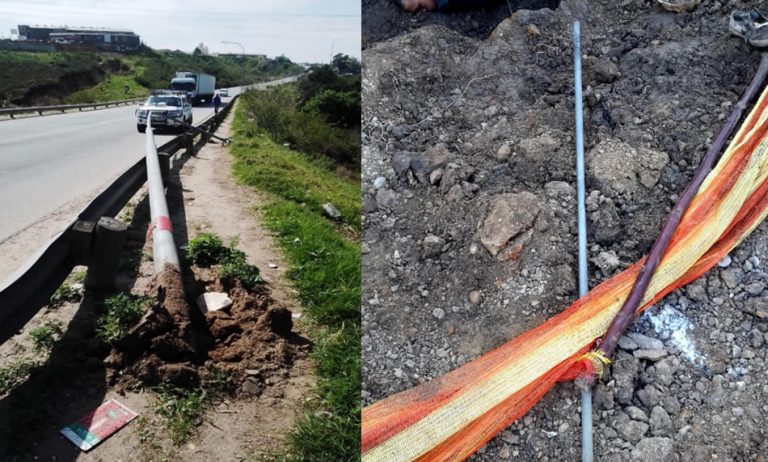
Issued George Municipality, 5 NOVEMBER 2021George Municipality is facing an uphill battle with ongoing illegal connections and vandalism of electrical infrastructure. An incident in the early hours of Thursday 4 November is currently under investigation following the death of one man and injury and subsequent hospitalisation of another, while allegedly attempting to steal a copper earth bare conductor.  SAPS has opened a case of inquest into the death, and George Municipality has opened a case for theft and damage to municipal infrastructure.Theft and vandalism of infrastructure The continual targeting of municipal electrical infrastructure by cable theft, damage to kiosks, and illegal connections is a highly concerning matter to the municipality, as such incidents affect electricity supply to the rest of the community during the repair period, incur extremely high repair and replacement costs, loss of revenue as well as in this case loss of life. It is extremely important that SAPS, Municipal Law Enforcement, officials, community leaders and residents work cohesively together, to fight this issue of theft and vandalism in our communities.In the past four months alone, George Municipality has opened 20 cases of either theft or vandalism and more than eight arrests of individuals have been made due to the integrated approach and collaboration between various stakeholders. The average cost to the municipality in terms of repair and replacement over the past six months is over R1 million rand.In terms of the Occupational Health and Safety Act, George Municipality has a responsibility to maintain a safe electrical network and for that reason a service provider has been appointed to clear illegal connections, on an as and when basis. Municipal officials are unable to work on or maintain the network unless all illegal connections on the line have been cleared.Report offendersThe municipality asks that law-abiding citizens take it upon themselves to report illegal connection activities to SAPS as soon as they see them taking place. Legal consumers should also seriously consider how these illegal connections affect them and their families. An illegal connection not only puts the perpetrator in danger of electrocution, risking injury and death but also the rest of the community. Illegal connections should be reported to 044 801 9222 or after hours on 044 801 6300.Dangers of illegal connections  The dangers of illegal connections have consistently been re-emphasized to the communities of George, with such actions having cost several lives in recent years. These connections lie across pathways and walkways where anyone passing can easily be electrocuted. An additional risk is that illegally connected wires can also make contact with other items such as roofs, gutters and washing lines, making these items live and able to conduct electricity.The human body can only withstand about 50 milli-ampere (less than 1% of the current drawn by an average kettle) through it, before a medical condition called ventricular fibrillation sets in. To safeguard people against this, each house with legal electricity and a tariff meter is fitted with an earth leakage protection unit.  Children can easily be killed, due to their lower weight, because of illegal connections not having earth leakage protection.An electricity connection is considered illegal when it is connected to the George Municipal network without the organisation’s permission. Wires are connected to a mini-substation or overhead pole. The forms of electricity theft include illegal connections, illegal electrification schemes and meter tampering and bypassing. These illegal electrical thefts are mostly in areas where illegal informal structures are built.Where people have connected themselves illegally, George Municipality will continue to actively find the perpetrators and lay criminal charges against them. In terms of the Criminal Matters Amendment Act 18 of 2015, a maximum term of imprisonment of thirty (30) years can be given, as the interference with, and damage to Municipal property, can be regarded as sabotage.Reward for information leading to successful prosecutionGeorge Municipality will pay a reward of R2500 to any person who offers information on vandalism and theft incidents, and which information leads to the successful conviction of the perpetrator in a court of law.  The paying of a reward is legal in terms of the MFMA (Municipal Finance Management Act) and is seen as a necessary step to combat the expenditure on the repair of vandalized and stolen infrastructure. These assets are managed by the municipality on behalf of the public and it is George Municipality’s request to all of our residents to assist us in looking after and protecting these assets.The public can contact the Anti-fraud toll free number 0860 044 044 or report vandalism and theft verbally, by email or to any of the municipal or SAPS telephone numbers. The member of public reporting will have to supply their name and contact details as their testimony may be required for the successful conviction of the perpetrators. The identity of those providing assistance will be protected.George Municipality calls on the community to please assist us in eradicating theft and vandalism, to allow the municipality to improve service delivery and continue to improve the quality of peoples lives.Report Illegal connections to 044 801 9222 or after hours on 044 801 6300. Report to 0860 044 044 with details to be eligible for the reward.

Career as a Real Estate Agent

Rozanne has been involved in the sales industry since she graduated from university. After studying photography she began working in administration at Seeff and later decided to become a Real Estate Agent. She has also worked in America for some time and learned a lot from their perspective on sales.Helpful tipsAccording to Rozanne, organisation is a key quality in a Real Estate Agent. If your day is not planned out — with room for spontaneous viewings and appointments — it will very quickly run away from you!Confidence is another important quality as you need to be comfortable working with people as well as cold calling people.Relationship building is a huge part of the job, so you need to make this a priority and ensure that your clients feel that they can trust you.You also need to be:
  • Dynamic
  • Established
  • Professional
  • Innovative
  • Supportive
What is the process like?There are 5 steps in the process of becoming a Real Estate Agent:
  1. Apply for a position at a registered estate agency as an intern
    • You will be mentored by a professional and experienced estate agent.
    • You will need to complete your FETC (the Further Education and Training Certificate) in Real Estate at level NQF 4 and receive a certificate of competence from Services SETA (the Services Sector Education and Training Authority).
    • You can combine the FETC NQF 4 qualification and the internship as long as you have completed at least 8 months of your internship.
  2. Register with the Estate Agency Affairs Board (EAAB)
  3. Complete your 12 Month Internship
  4. Complete NQF 4 Through an Accredited Provider (150 Points / 1500 Hours)
  5. Write and Pass Your PDE4
If you would like to become a principal agent and run your own business, you must be competent in NQF level 5 and PDE level 5.All together it will take about 2-3 years for an intern estate agent to complete the whole process and 3-4 years for a principal.Rozanne also recommends setting aside money to support yourself for at least six months after you start up, as it takes time for things to get off the ground.What can high school students do now to prepare themselves?
  • Start educating yourself about the ins and outs of the property industry.
  • Look into free online resources.
  • Develop yourself. Work on some of the qualities mentioned in this article like confidence, trustworthiness, and being organised.
Rozanne says that she loves the process of matching the right home to the right person, as well as how unique each and every project is. Constantly working with new people and learning on the job are just part of the territory and add to the excitement of the career of a Real Estate Agent!If you’d like to watch the full interview with Rozanne head over to our Facebook or Instagram page:Herewith the link:  https://www.instagram.com/tv/CSgvyHXD1EW/?utm_source=ig_web_copy_link

The horse has bolted – 2021 George Municipal Election results. What now?
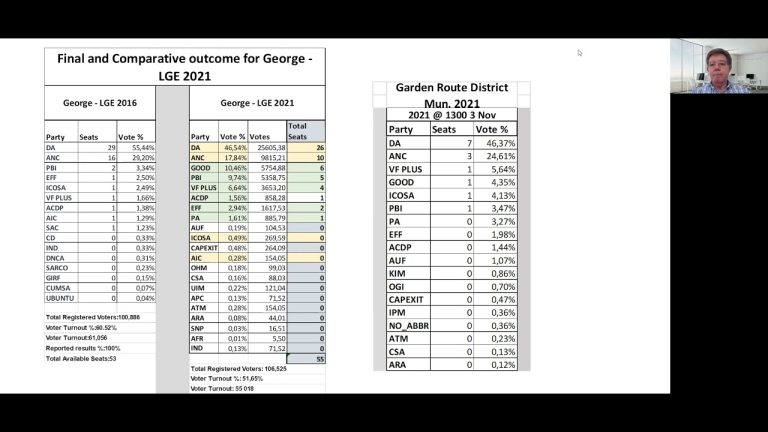
Insight into the results and next steps of the 2021 Local Government Election for George. Is the “Kingpin” going to be dominant in the pending coalition? 

SOUTH AFRICAN ELECTIONS 2021 – A gradual shift to a shared future

0
By Cheryllyn Dudley – former MP, Author and Dia LOGOS Political Analyst dialogos.co.za/south-african-elections-2021-a-gradual-shift-to-a-shared-future/ As South Africans prepared to vote in the local government elections that would determine the direction of our municipalities for the next five years, commentators, expressed the common thought that voter turnout would significantly determine the results.  This observation however did not throw much light on the possible outcome. The IEC revealed that only about 26 million South Africans registered to vote in the 2021 elections and 19,8 million (75.5%) actually turned out to cast their vote (as counted at 21:00 on 3 November). SA has a population of about 60 million. This means some 6 million SA registered voters and many more who did not register, chose to leave the choice of who runs their local council to just 19.8 million.The lower than expected voter turnout could have been due to apathy, challenges on the day, weather… or it could be a protest vote or the result of a lack of trust in political institutions. While we can all relate, we thank God for those who refused to give up and chose to stand in the gap in prayer and voting despite the temptation to fall into apathy, despondency or rebellion. The 2021 municipal election campaigns highlighted the diversity of South Africa and the perceived racial divides, yet major differences in manifesto promises were not that obvious. Most who would normally predict results with confidence hesitated in the face of the relative similarities across many party lines – except of course for the personalities heading the parties or individual campaigns. What stands out of course is the welcome freedom people experienced as they expressed their own specific brand of individualism or collectivism and proudly put our much cherished ‘diversity’ on display.  Results in the metropolitan municipalities where almost 70% of South Africans work and live, reflect both optimism and to some degree the old adage of “better the devil you know than the one you don’t” while still sending a message to their parties that they can and will be punished at the polls if they don’t deliver. As seemed likely, in Nelson Mandela Bay the DA (39.07%) and the ANC (40.8%) are running neck in neck, the EFF a distant third (6.75%) and the GOOD party, UDM, FF Plus, ACDP, and the Patriotic Alliance (PA) just getting a foot in the door. Based on the proportional representation (PR) votes the Council for Scientific and Industrial Research (CSIR) predictions for the country’s metropolitan municipalities puts:
  • Johannesburg at – ANC 36.3%,  DA 31.4%, EFF 12.2%, ActionSA 9.4%. 
  • Ekurhuleni at – ANC 39.3%, DA 29.8%, EFF 12.8%, ActionSA 6.3%. 
  • Tshwane at – ANC 34%, DA 34.3%, EFF 12% ActionSA 6%.
The IFP looks to be the biggest surprise to date and while vote-counting is slow in KwaZulu-Natal, the IFP rather than the EFF seems to have taken the edge off the ANC’s prominence in the province.  The Freedom Front Plus (VF+) have managed to take advantage of the current political situation and won seats in many councils it had not served on for many years, and will be the official opposition in at least one municipality (Koster) in North West. It seems the floating NP votes that veered to the DA for a season have returned home to strengthen the VF+. Parties with majority coloured support, like the Patriotic Alliance (PA), Good Party and the Cape Coloured Congress (CCC), have clearly impacted on the DA and the ANC in the Western Cape and Gauteng.  Daily Maverick points out that “Gayton McKenzie’s PA not only solidified its strong showing in Eldorado Park in the south of Johannesburg, but set itself as kingmaker in a number of rural municipalities”. In the meantime Community Forums, are giving the ANC a run for their money in formerly strong ANC municipalities. These local government elections are indeed reflecting the shift expected with regards to separating local and National issues and alliances. The bigger parties who have had the false impression that their support could be taken for granted will have to step up to the plate or continue to decline – favour comes but it usually only lasts for a season. The impossible task of pleasing everyone has at least been unmasked at a local level. Now we need to hope and pray for a level of maturity that will enable parties to work together for the common good of all who reside in their communities. In my view, coalition governments have not proved effective or efficient but this should not mean that they can’t put the people above their ego’s if they choose to. The way our cities are managed as we go forward, will impact significantly on how people perceive life in South Africa and will help stimulate or stifle local and international investment and tourism. The signs of a healthy democracy however, like it or not, are that things will always look somewhat messy, iffy and noisy.  While South Africa’s democratic politics has generally been dominated by what has been referred to as ‘elite’ parties like the ANC, DA and EFF returning to councils either as a majority or significant opposition, this election gave little room for the usual confidence and arrogance. This has to be good!Declarations regarding coalitions will now be tested. The DA is on record that it will not go into coalitions with the EFF again. Smaller Parties like the UDM, Patriotic Alliance and ACDP, have played the role of kingmaker in the past and are likely to do so again but with many newer, stronger local parties in the mix. Of course, many of us were eager to see how independent candidates, backed by Maimane’s One South Africa Movement would fare and how they will align themselves. Especially since the 2024 elections will feature independents on the national and provincial ballots for the first time.  Time will tell as the story unfolds.  Now is a time to help those who made it be the best they can be. We are as much responsible for their success as they are. My opinion is that: The more we are aware of the temptation to place Individual and party interests above those of the country as a whole and the more we make concerted efforts to resist the temptation – we will experience more of the best of a people who choose to value diversity and unity. I came to understand, in time that a biblical perspective accepts the imperfection of the world and sought to serve, preserve and bless, doing what I could to make society – not perfect but – as just as possible.  A justice that measures political systems by the quality of justice the system secures for the poorest of the poor and weakest of the weak, that seeks ways to work with whatever political leadership we have, not accepting the myth that one leader will be all good and another all bad, and a justice that always looks for ways to move towards redemptive restitution and restoration.On the issue of unity I also couldn’t agree more with Solly Moeng, CEO of DonValley Reputation, who said recently: “The unity we need cannot be imposed from outside. It must come from within. If we fail again to appreciate the bigger picture, misplaced levels of racial suspicion and intolerance will continue to rise and only benefit the plethora of opportunistic political entrepreneurs whose numbers keep rising”.   Our hope as Christians however need not waver as we read in Luke 18:27 that Jesus, told those who questioned him that what is impossible for man is possible with God. Yes, what is impossible for man is made possible with God and He who touched our hearts can touch others. 

THREE POINTS TO CONSIDER IN A POST-ELECTION SOUTH AFRICA

By Mike Burnard – Analytical strategist at dia-LOGOSFor those who expected a more drastic change in local and national government, the outcome of the elections might be disappointing.  But there are three points to consider when analysing the results
  1. In Africa, sudden political shifts are never conducive to peaceful transitions. We need gradual movements of change to secure peaceful transitions and fortunately, this election secured just that.  The ANC has gone from 65% in 2005 to 62% in 2011 to 54% in 2016 and now a predicted 46% in 2021.  This is a healthy trend in a maturing democracy and as Christians, we should rejoice that God is dealing gently with us as a nation.  Never be disheartened by gradual change.  God has His ways and His time, and we should rejoice in that
  2. Patience is a good virtue ONLY if exercised with perseverance and continuity. All South Africans now need to build patiently on this platform of democracy for a better and a shared future.  We cannot stop now, and we dare not lose hope.  For those who did not get who they voted for, rejoice that you were able to participate in an event that celebrated your freedom, not your victory.  Nearly all countries on Earth call themselves democracies but according to the best metrics we have, only 86, or 44% of them, meet the standard required for democratic participation. South Africa is one of them – count your blessings.
  3. Let’s not waste the lessons we’ve learnt from a painful past. Reconciliation is now more achievable than ever before.  Let’s not get side-tracked by those who seek to promote agendas and personal egos.  Let us, therefore, remember these words of Paul:  2 Corinthians 5:19-20  that God … has committed to us the message of reconciliation.  We are therefore Christ’s ambassadors, as though God were making his appeal through us.

I want to close with the words of my colleague, Cheryllyn Dudley:  “We can do so much more than just identify problems  and criticize”.  Let’s give thanks for peaceful elections and let’s move forward like people who have hope, faith, and eternity at heart

Career in Equine-Assisted Psychotherapy & Psychology

Sian began her psychology career in 2015 when she began her undergrad at Stellenbosch University. After completing her undergraduate degree she undertook her Psychology Honours year, during which she became interested in the Equine-Assisted Psychotherapy field. After completing her Honours year she partook in an EAGALA training and became an EAGALA certified Equine Specialist. Sian is currently applying for the Clinical and Counselling Psychology Masters programmes at numerous South African universities.Career tips for someone wanting to go into this career:There are many ways of going about getting into psychology. Here are some general tips:
  • First figure out which field you want to go into: Clinical, counselling, research, educational, industrial, social, child, career, sport psychology etc. This decision will inform what degree you pick or what faculty you study through.
  • Research the university. Generally speaking they cover the same topics within psychology but some universities do not offer specific topics, for example, neuropsychology. This can change depending on what staff are available at that particular time.
  • Volunteer. Anything is helpful but especially anything that has a social justice or counselling foundation. This is difficult as until you are registered with the HPCSA you are not actually qualified to provide counselling. An option is to obtain training with an organisation and then work as a lay counsellor for them. For example: Lifeline, Childline, FAMSA, SADAC.
  • If you want to go into something specific, such as music therapy, art therapy, animal-assisted therapy, or equine-assisted therapy, start researching this and see what other courses are available outside of university.
  • Check out Cognition & Co. They have an extremely helpful website for psychology students specifically made to provide information and assistance to students of all levels, from high school up to Masters, but particularly for students in the interim between Honours and Masters. They have all the information you need, plus they run mentorship programmes and post informative interviews and videos with professionals in the field.
When going about getting your psychology degree there are two main routes to consider:
  1. BA Humanities Undergrad (3 years) + Honours (1 year) + Clinical/Counselling Masters (3 years) It is highly likely that there will be multiple years between your Honours and Masters degrees, as it is an extremely competitive field and experience is required for application to the programme. A Psychology Honours degree does not qualify you to work in the mental health field in any way, it is simply a necessary step before your Masters.
  1. BPsych The BPsych degree is basically a BA in Psychology, combined with an Honours degree in Psychology, as well as a 6 month practical internship (4 years). What this means is that when a student has completed this degree they are able to register as a Registered Counsellor after successfully passing the board examination. This means you can work as a counsellor and get extremely valuable experience for Masters applications if you wish to continue your studies. However, not all universities offer this, and you would need to look up which offer HPCSA accredited BPsych degrees.
What can high school students do now?
  • Start volunteering.
  • Do some research into different fields of psychology to see what you are interested in.
  • You can even set up appointments with psychologists to ask questions.
  • There are free psychology courses online (for example: EdX introductory courses) that would give you an idea of what an undergrad syllabus would cover.
  • Make sure you are at least bilingual. Any African language is a huge advantage as there is a distinct lack of isiXhosa and isiZulu speaking psychologists in South Africa and this affects how we are able to serve our communities.
  • Work on your hobbies. Especially in psychology you never know, you might be able to integrate your hobby into your work in some way.
The journey to become a psychologist is a long one, but if it is something you are passionate about, it is absolutely worth it. Using the tips from this interview you can set yourself up for success, whether that is in your Master’s applications or on your path to become a counsellor.If you’d like to watch the full interview, head over to our Facebook or Instagram page! Herewith the link: https://www.facebook.com/110023120536489/posts/375514157320716/

Getting ready for ANY interview!

Interviews are pretty daunting.. but unfortunately they’re an unavoidable step in any job application.Wouldn’t it be great to walk into an interview knowing exactly what to expect, what to wear, and knowing the ins and outs of interview etiquette?Well read on!  
Here are our TOP TIPS for interviews:
  1. Dress appropriately. Not every job interview requires a blazer or pencil skirt — keep in mind the kind of work you would be doing. Research the company for any dress policies and keep these in mind when dressing for the interview.
  1. Research the company. Have a look at their website, social media pages or any mentions of them in the news. Having an understanding of the company will not only make you seem well-informed and competent, it will also help in answering questions, as you can link your experience and background to the company and its goals.
  1. Prepare your answers to the standard interview questions. Have a short summary about yourself and an answer to “why did you apply for this position?” ready to go.
  1. Make sure you understand the job description. Read and reread the job description, highlight specific skills or tasks that you feel you are good at, and bring these up during the interview. Even better, have examples from past work experiences to back these skills up.
  1. Always have your own questions prepared. This shows you are taking the interview and the possibility of working with them seriously, and is bound to impress.
  1. Lastly, don’t forget your manners! Arrive on time, greet everyone, say thank you, never interrupt, and ensure that you thank the interviewer for their time.
By applying these TOP TIPS, you are sure to put your best foot forward during any interview!

When was the last time you checked your CV?

Your CV is the first step in any interview process, so it needs to set you apart from other applicants and leave a lasting impression on the interviewer. An untidy or disorganised CV probably won’t make it through 10 seconds of review, even if you are a good candidate for the job!Many CV’s severely let people down. Missing information, untidy documents, or unstructured sections immediately convey a lack of effort or enthusiasm, which is not the first impression most of us would like to give to our potential interviewer. Why is something as simple as a CV what trips us up when applying for a job?
Therefore, we need to take the time to check our CVs for that competitive edge and holistic picture of who we are. However, contrary to popular belief, it doesn’t have to be complicated, and it doesn’t have to be fancy. Here are some of our top tips:
  1. Use a simple and elegant template. There are loads of free templates on Google that allow you to simply copy-paste your information in. No fuss. No spending hours on Word trying to keep your text boxes in line — and yet, the interviewer will be thoroughly impressed by your neatness and professionalism.
  1. Include a photo. This isn’t a must, but it’s always nice to put a face to the name. Please do not use your Whatsapp profile pic or an obviously cropped picture of you with your friends. Most pharmacies and photo shops offer packages of ID photos for a small amount. These look very professional and are perfect for CVs and other application documents. Just be sure to look neat and tidy — and smile!
  1. Include a short summary of yourself at the beginning of your CV, including who you are, what you do, and what your interests are.
  1. Include all experience you have. Yes, ALL. Any volunteering you’ve done, job shadowing, school groups you were a part of, that 5km charity run you did. All these details add up to give the interviewer a broader understanding of who you are.
  1. Use sections to organise your areas of experience. For example, have seperate sections for education, work experience, community service and hobbies/interests.
  1. Lastly, don’t forget to include contact information, languages you are proficient in, and references.
Make sure all of this fits on a maximum of 2 pages, in a clear font, and most importantly: run it through a spellchecker!And may you find yourself having success in every application you send your CV in for!