Avontuur motorfietse is al by die twee dekades die in ding as dit by motorfietse kom. Die bekoring van die grondpad, poorte, passe, avontuur wat wag! Mens kry dan ook twee soorte “avonturiers”. Jy kry die ploert wat op die bank sit en vertel hoe, as hy eendag die R300 000 motorfiets met padbystand, beste toerusting en klere het, hy fantastiese avonture gaan beleef. Hierdie avonture sal dan ook meer mal as anders net rusbank-drome bly. Dan kry jy die regte avonturiers, die manne wat nie wag tot hulle eendag als (en net van die beste) het voor hy moontlik sy avontuur aanpak nie, nee. Die ouens pak die avontuur aan, nou, met wat hy het.

Christo Serfontein het so avonturiers-hart. En dis nie asof hy nie van beter weet nie. Christo is die voormalige eienaar van ‘n 800GS, asook ‘n 1200GS. Maar toe die pad weer begin roep en al wat in sy Mosselbaai se motorhuis staan is ‘n SYM CROX 125 met die bynaam “Tuffy”, was die toer aan.
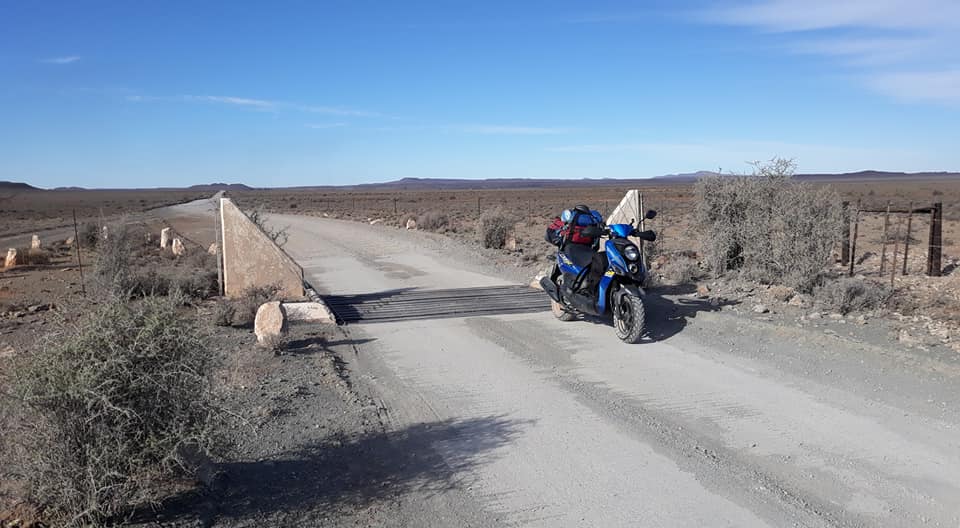
Die SYM CROX herhinder nogal aan die Yamaha BWS. Dis so amper ‘n “crossover” skoeter met lekker vet bandjies, Hy is lig, maklik om te ry en boonop lekker ekonomies, so die begroting is nie so groot struikelblok tot avontuur soos met die groot fietse nie. Christo het die fiets gepak en gery. Karoo toe. Klein Karoo, Groot Karoo, Loxton verby. Draai gegooi deur die Moordenaars Karoo, nuwe vriende gemaak in Merweville en terug gekeer oor die asemrowende Swartberg pas. 4 dae en 1140km later, toe stop Christo weer by die huis, tevrede.
Volgens Christo het die SYM CROX die pad besonder goed gehanteer. Jy pas net jou ry-styl en spoed aan by die fiets en die toestande. En omdat jy rustiger ry, is jy nie haastig nie, rus beter en sien meer. Ook, omdat die fiets so lig is (112kg) en die op- en afklim so maklik, stop jy makliker om die omgewing te verken of om ‘n foto te neem. Dis nie ‘n geklouter en gesukkel met ‘n swaar fiets nie.
Die SYM draf gemiddeld so 80km/h op ‘n goeie grondpad en anderkant 100km/h op teer, maar dit was nie die punt nie. Hierdie was ‘n reis. Die enigste nadele wat Christo ondervind het was die klein brandstof tenk van 5L, maar dan het die SYM met 140kg (bagasie en ryer) op sy rug steeds 25km/L gekry. Dus het die 5L wat Christo ekstra saam gery het gesorg vir ‘n totale reikafstand van by die 250km. Die ander probleem was dat Christo elke keer die bagasie moes aflaai om by die tenk onder die sitplek uit te kom, maar dan, hoeveel bagasie kan daar nou op ‘n soeter wees?
Omstanders se reaksie tot ‘n reisiger op ‘n skoeter is een van verbasing, maar altyd vriendelik, vol vrae en die ontvangs sonder uitsondering positief. Christo se ervaring op die skoeter was een van vryheid en die belangstelling in sy avontuur het alle reise op “gewone” motorfietse totaal oortref.
Met ‘n skoeter wat R17 995 “uit die boks” kos en slegs 25km/L verbruik, het niemand meer verskoning dat ‘n avontuur ‘n motorfiets van R300 000 verg nie. Hierdie “Tuffy” gaan dit nog oor en oor bewys.
Gee my spoed, Sakkie!
Die veelsydige SYM CROX 125 is nie net ‘n ideale pendel fiets of klein avontuur fiets met ‘n groot hart nie, nee. Thundercycles in George het ook ander groot planne vir die CROX. Charl Joubert het ‘n SYM Crox van die vloer gehaal en na die werkswinkel geneem. In ‘n projek wat herhinder aan die ou skooldae toe ons nog ons 50cc motorfietse “warm” gemaak het, kry hierdie skoeter ‘n ander uitlaat en daar word gepeuter met die lugfilter en vergasser, want sien, hierdie SYM CROX word voorberei vir skoeter resies! Hier is ‘n nuwe ding wat kop uit steek in George. In ‘n volgende uitgawe vertel ons meer!
SYM? Wie?
SYM staan vir Sanyang Motor Co., Ltd. Die maatskappy is reeds in 1954 in Taiwan gestig en vervaardig motorfietse, skoeters en vierwielers onder die SYM naam, terwyl hy motors bou vir Hyundai en ander voertuie vir Bombardier, Mahindra en International Trucks. SYM het al meer as 16 miljoen motorfietse en 800 000 motors gebou. SYM se uitset tans is 600 000 motorfietse en 20 000 motors per jaar, met ‘n omset van meer as ‘n Miljard Dollar.

Artikel: Johann van Tonder; Fotos: Christo Serfontein








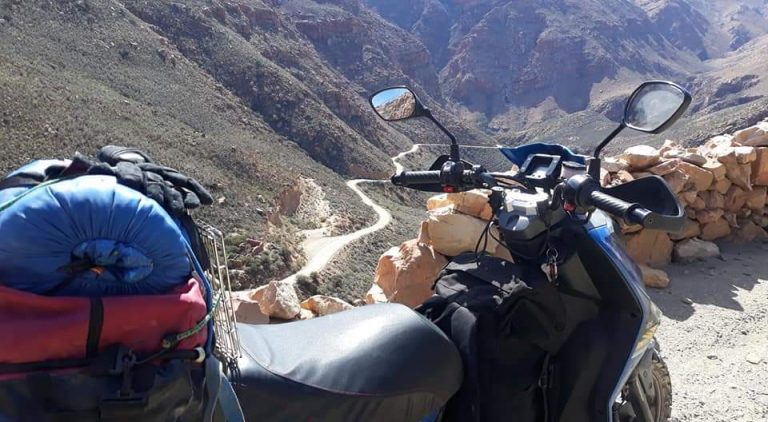
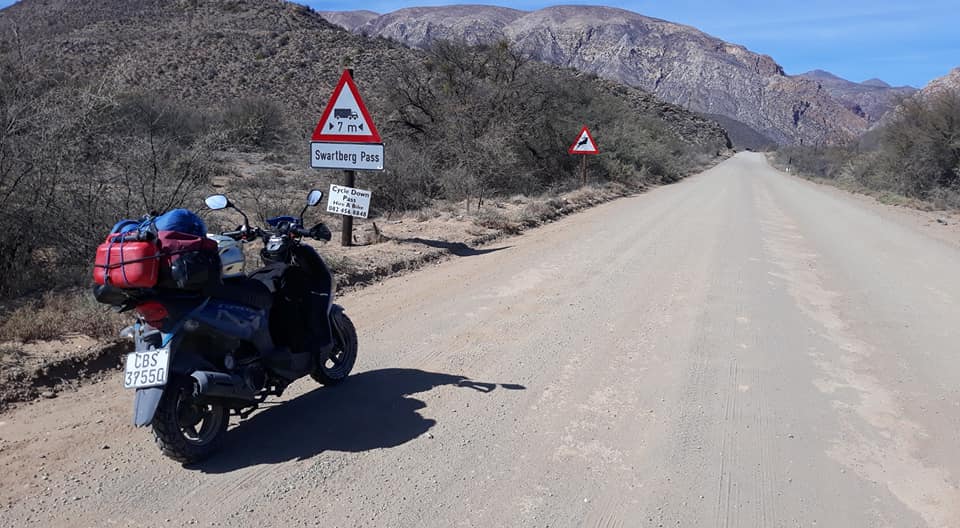
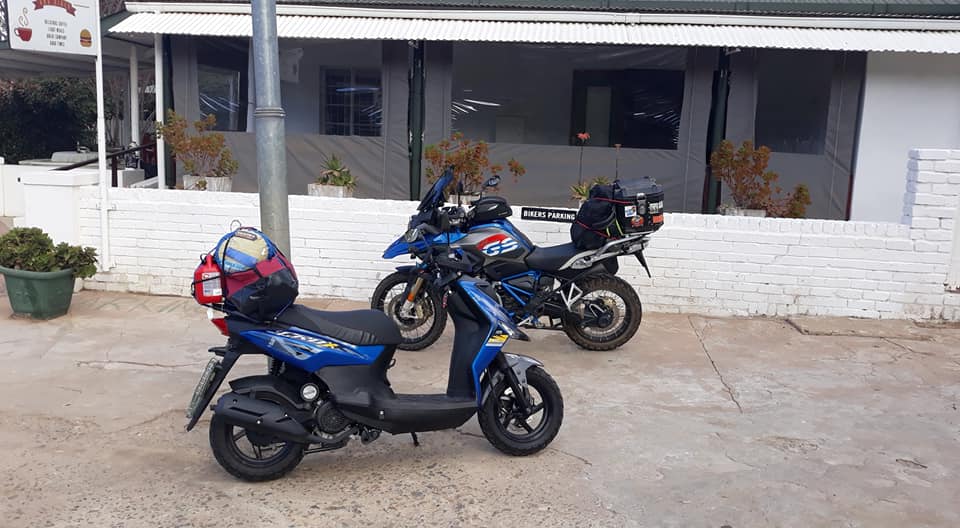 Christo Serfontein het so avonturiers-hart. En dis nie asof hy nie van beter weet nie. Christo is die voormalige eienaar van ‘n 800GS, asook ‘n 1200GS. Maar toe die pad weer begin roep en al wat in sy Mosselbaai se motorhuis staan is ‘n SYM CROX 125 met die bynaam “Tuffy”, was die toer aan.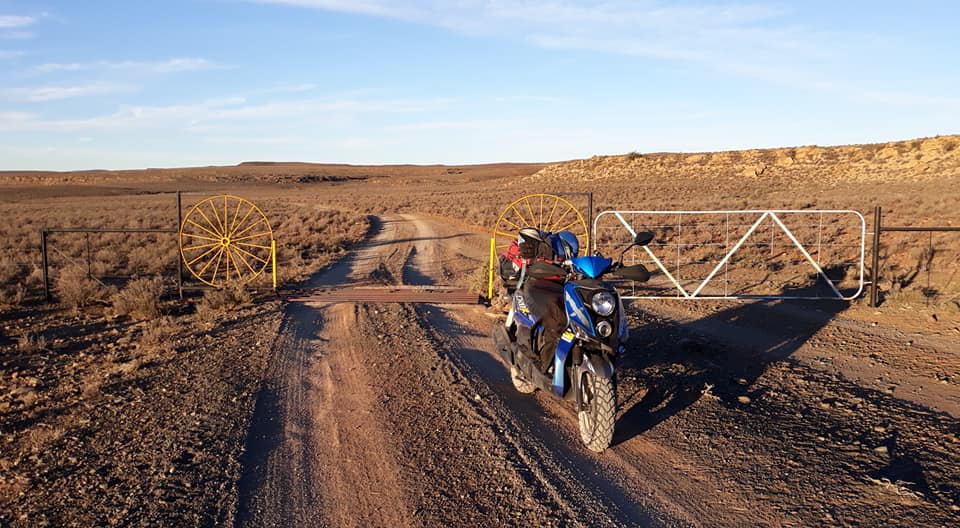
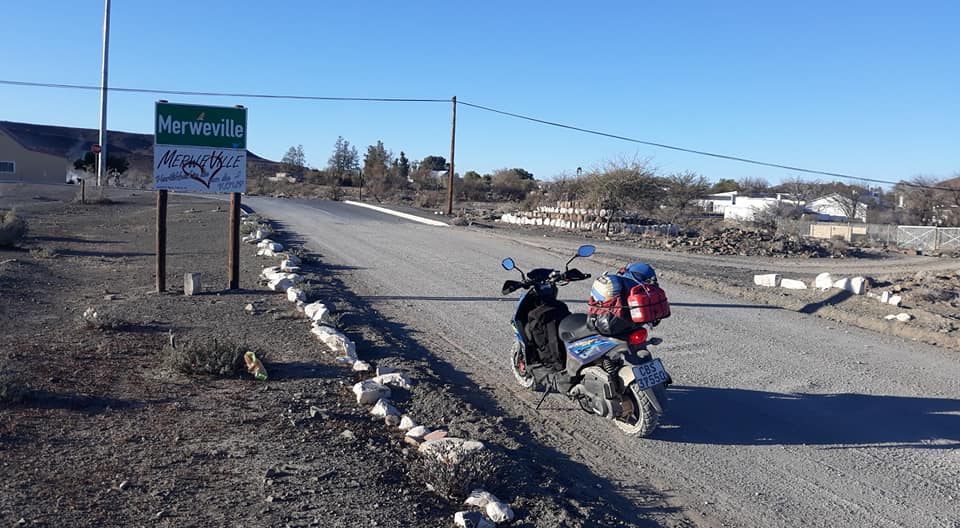 Die SYM CROX herhinder nogal aan die Yamaha BWS. Dis so amper ‘n “crossover” skoeter met lekker vet bandjies, Hy is lig, maklik om te ry en boonop lekker ekonomies, so die begroting is nie so groot struikelblok tot avontuur soos met die groot fietse nie. Christo het die fiets gepak en gery. Karoo toe. Klein Karoo, Groot Karoo, Loxton verby. Draai gegooi deur die Moordenaars Karoo, nuwe vriende gemaak in Merweville en terug gekeer oor die asemrowende Swartberg pas. 4 dae en 1140km later, toe stop Christo weer by die huis, tevrede.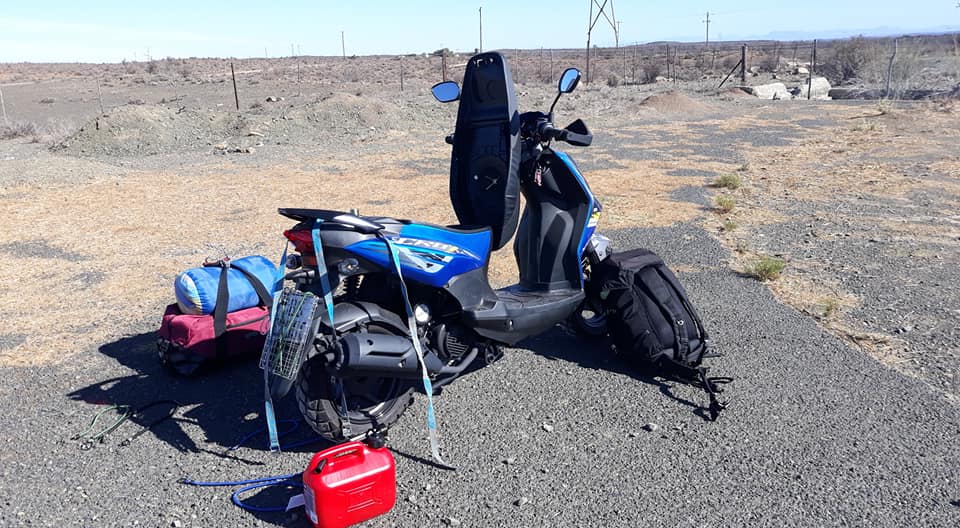
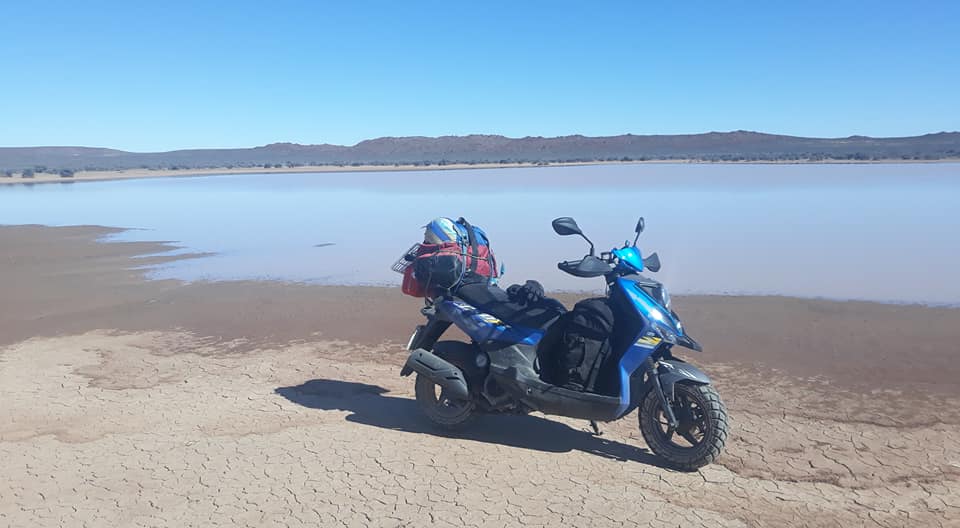 Volgens Christo het die SYM CROX die pad besonder goed gehanteer. Jy pas net jou ry-styl en spoed aan by die fiets en die toestande. En omdat jy rustiger ry, is jy nie haastig nie, rus beter en sien meer. Ook, omdat die fiets so lig is (112kg) en die op- en afklim so maklik, stop jy makliker om die omgewing te verken of om ‘n foto te neem. Dis nie ‘n geklouter en gesukkel met ‘n swaar fiets nie.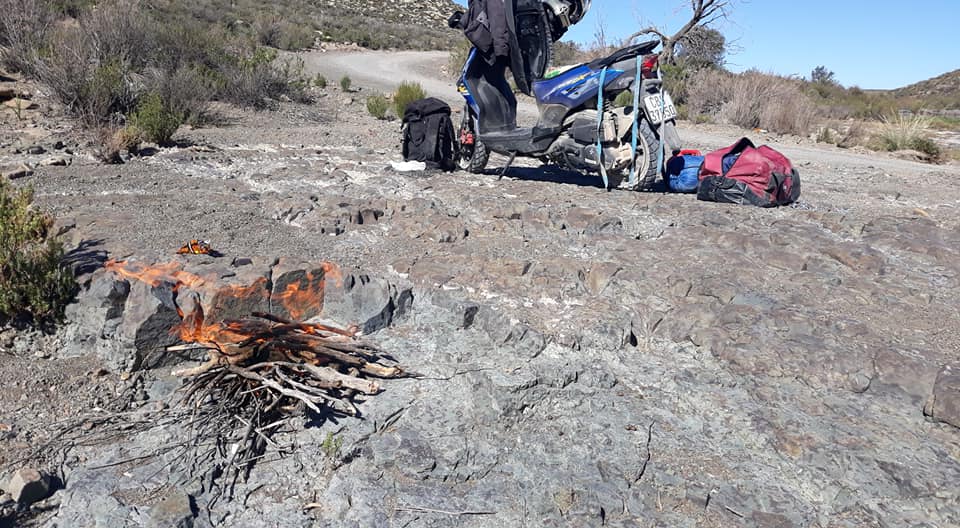
 Die SYM draf gemiddeld so 80km/h op ‘n goeie grondpad en anderkant 100km/h op teer, maar dit was nie die punt nie. Hierdie was ‘n reis. Die enigste nadele wat Christo ondervind het was die klein brandstof tenk van 5L, maar dan het die SYM met 140kg (bagasie en ryer) op sy rug steeds 25km/L gekry. Dus het die 5L wat Christo ekstra saam gery het gesorg vir ‘n totale reikafstand van by die 250km. Die ander probleem was dat Christo elke keer die bagasie moes aflaai om by die tenk onder die sitplek uit te kom, maar dan, hoeveel bagasie kan daar nou op ‘n soeter wees?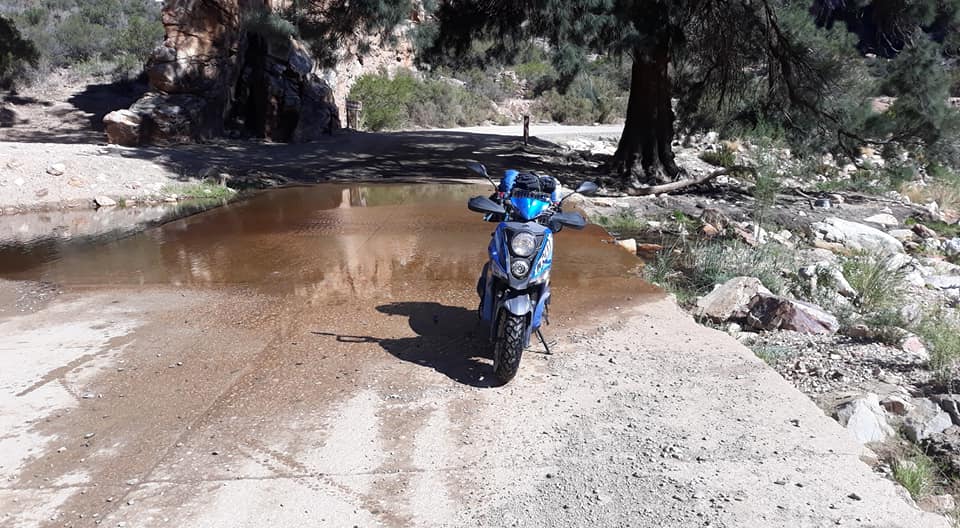


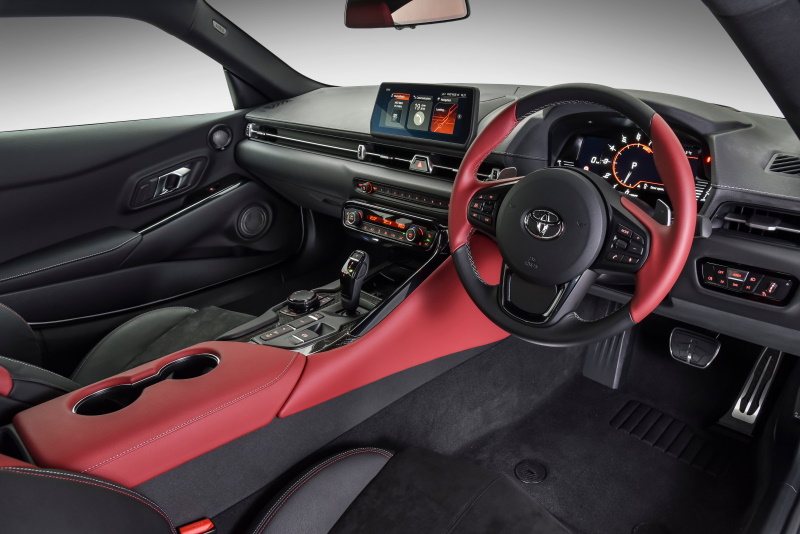 What many of us tend to forget, maybe conveniently, is that Toyota does not have a strong, brawny in-line six-cylinder engine in its garage. Oh, the 2J? Well, it’s an old engine and will not pass modern day emission requirement tests. Who else to turn to than BMW who’s been building six-cylinder engines for as long as we can remember. There was no two-ways about it, because the Supra needs to be powered by such an engine. Nowhere in the car’s history has any other engine been used. If not for BMW and the company agreeing to share parts, then the Supra might not have happened.See, producing just another engine would not be that difficult for a company like Toyota. But when you factor in emission requirements, research and development costs to have the engine comply with today’s stringent tests, then you’re better off buying from someone and making a deal on how the two companies can work together on future projects. Cost- or part-sharing, if you will. Part-sharing is not uncommon, either. Toyota and Subaru partnered a few years ago to produce the GT86 and BRZ, respectively. Ford and Mazda did it for years on their cars and bakkies. Opel and Peugeot will be doing it soon with the next-generations Corsa and 208. BMW and Jaguar Land Rover recently joined forces to work on electric vehicles for the future.
 The GR Supra and Z4 sharing parts is not the end of the world and is there no reason for anyone to shout ‘Blasphemy!’ at the top of their lungs. The Toyota GR Supra is a sports car in own right, so it’s okay to give that celebratory fist bump.We will review the Toyota GR Supra alongside the BMW Z4 in a later issue.


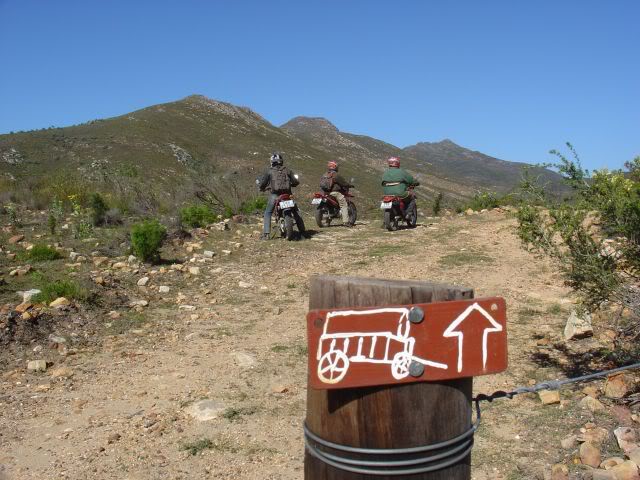
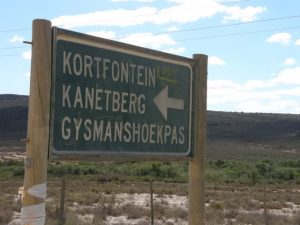 The historic pass lies near Heidelberg between way-points S33 58.220 E21 03.085 in the south and S33 53.468 E21 03.604 in the North, where it crosses the Langeberg mountains into the Klein Karoo. It is an easy start to the Ox Wagon Trail as Southern Cape passes go, but interesting nonetheless. It runs through three farms, Plattekloof in the South, then Kanetberg and Kortfontein on the Karoo side. The scenery and flora changes dramatically as to cross to the Northern slopes turning into typical fynbos and eventually Karoo vegetation. The track is generally in good condition and once in the mountains you are alone with little or no signs of civilization around.Gysmanshoek Pass runs through a gentle valley, a very easy road to build in those times. And yet, about 120 years after this route to the Klein Karoo opened they chose to build the Tradouw pass, a massive undertaking over very challenging terrain, instead of upgrading Gysmanshoek Pass. It almost makes no sense until you consider what it was like in the days of animal drawn vehicles.When the inhabitants of Swellendam wished to get to the Little Karoo on the other side of the Langeberg they had to travel either via Cogmans Kloof 50 kilometres to the west, or via Gysmanshoek, 30 kilometres to the east. Huge distances in those days worth days of traveling time. This of course also applied to Little Karoo farmers who wished to transport their produce to Port Beaufort on the Breede River, which Joseph Barry had opened to shipping in 1841.
 After the construction of the Tradouw and Garcia’s passes in 1873 & 1877 respectively, Gysmanshoek Pass fell in disuse. It came in handy for a Boer Commando during the Anglo-Boer War though, when they used Gysmanshoek Pass to flee back to the Karoo after attacking the headquarters of the West Yorkshire Regiment at the Masonic Hotel in Heidelberg on the 14th of September 1901.Today the road is seldom used, mostly by local farmers.
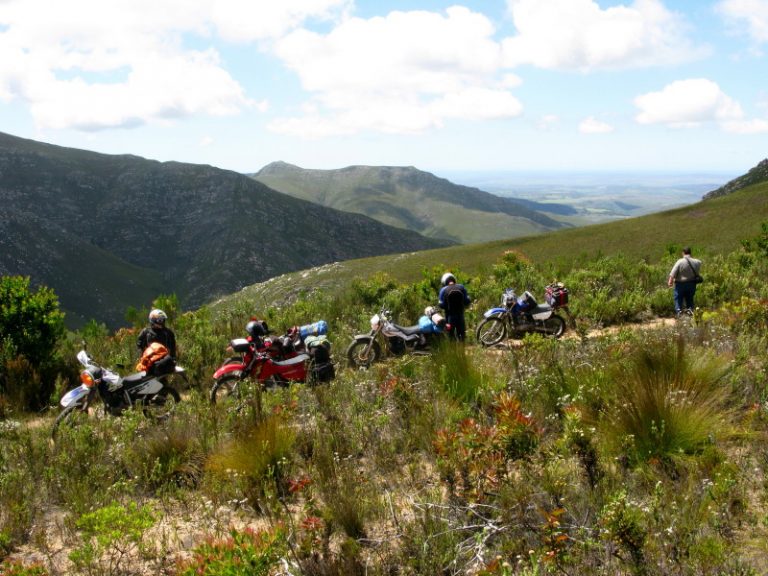
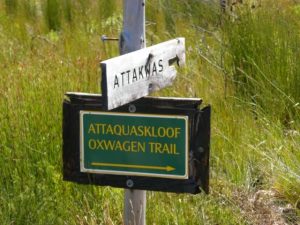 This valley was first inhabited by the bushmen or Khoi San, who were present until the 1700’s as there are paintings of persons riding horses with rifles and hats on their heads. A fierce Khoi-Khoi tribe called the Attaqua also inhabited the valley (arriving after the San), hence the name Attaquaskloof.The Attaqua were a particularly aggressive tribe who not only drove the San out of the valley, but also clashed regularly with the other Khoi-Khoi tribes, such as the Gourikwa, Hessekwa and Inca.In 1668 an official of the VOC (Dutch East India Company), Hieronymus Cruze, led a trading company in the area. They investigated the possibility of a harbour in Mossel Bay. Cruze had contact with the Attaqua Koi “who lived in a mountain valley” (Attaquas Kloof), but it was not till 1689 (37 years after the arrival of Jan van Riebeeck) that the first white man stuck his nose over the Attakwas Pass into the Klein Karoo.
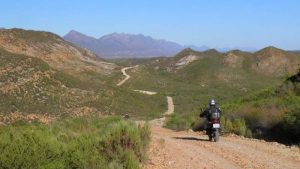 The first European to set foot in this valley was Ensign Isaac Schrijwer in February 1689. He led an expedition of 21 men and two ox wagons, sent by Simon van der Stel, to barter for cattle and sheep with the Inca Khoi-Khoi near Aberdeen. Isaac Schrijwer traveled along the coast to Mossel bay. He remembered Cruze’s report about the Attaqua Koi, but found that they had moved North into the Channa Land search of better grazing. He followed them out of the Kloof over the mountains following an elephant track. The area was densely overgrown and the elephant track had to be widened to take the wagons. This involved quite a bit of manual labour and the crossing took them seven days, four of which on this small section. On their return with numerous cattle and sheep, they were attacked by the Attaqua Khoi-Khoi, who took all the cattle and sheep. The following morning Schrijwer followed the spoor and cornered the Khoi-Khoi in Grootkloof. A fierce battle followed. That was not the last blood that flowed in this kloof.Isaac Schrijwer’s route over Attaquas mountain pass opened up the inland and soon this valley was ‘n busy trade route that flourished for 180 years. A town called Woeska was established and did brisk trade in this valley. Some of the old buildings can still be seen, though sadly it is not being looked after and in a worse state every time we pass. Amazing to think that people lived and made a living there for more than a century and today there is nothing left.Once through the kloof you find yourself on
 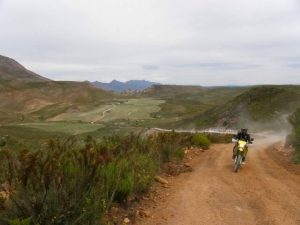 The route passes an old toll house, as well as the Attaquas hut. It’s also the spot of a commemorative plaque for Attaquas Kloof Pass. The hut is used by hikers walking along the Attaquas Hiking Trail. Sleep here at your own peril, for this is close to the spot where the notorious Bloubaard Swanepoel is burried. He has an unmarked grave near a tree that was fenced off. Bloubaard’s claim to fame was the fact that he was the last person to be publicly hanged in South Africa (on the town square in George).He was convicted on numerous counts of murder of persons who had bought cattle from him. After the sale he would ride over the Attaquas Mountains and ambush them on their way out with cattle, kill them and take the cattle back. He did this on four occasions but on the fifth occasion he did not see one of his potential victims who had gone to the bush to relieve himself. A lot of blood flowed in Attaquas kloof. It’s hard to marry that ugly truth to the natural splendour found here.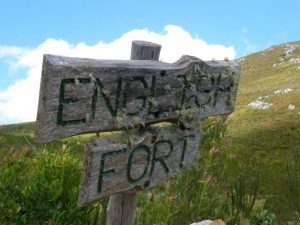
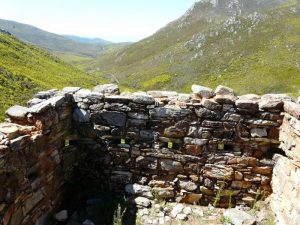 As was the case with Gysmanshoek Pass, the Boer’s during the Anglo-Boer War knew about all these little abandoned passes in the area, so they had to be guarded. Near the summit of Attaquas Pass you find the remains of an old English Fort. And on the Oudtshoorn side of the mountain you find the remains of yet another settlement. This spot had an hotel and general dealer and would have been a perfect stop for travellers before crossing the mountain en route to Mossel bay.Sadly not much is known today about this settlement. It is situated on the farm Saffraanrivier and the old hotel was apparently called “Die Bonthuis”. Rumour has it that there was a murder here and one of the owners hung himself from a tree in front of the hotel, but there are no documented proof of this (that I know of). Sue van Waarts mentions this in one of her books.Attaquas Pass crosses the mountains a mere six kilometres West of present-day Robinson Pass and this route exits on Robinson pass at S33 49.079 E22 02.314 The whole route (as well as the other 4×4 trails) are mapped on the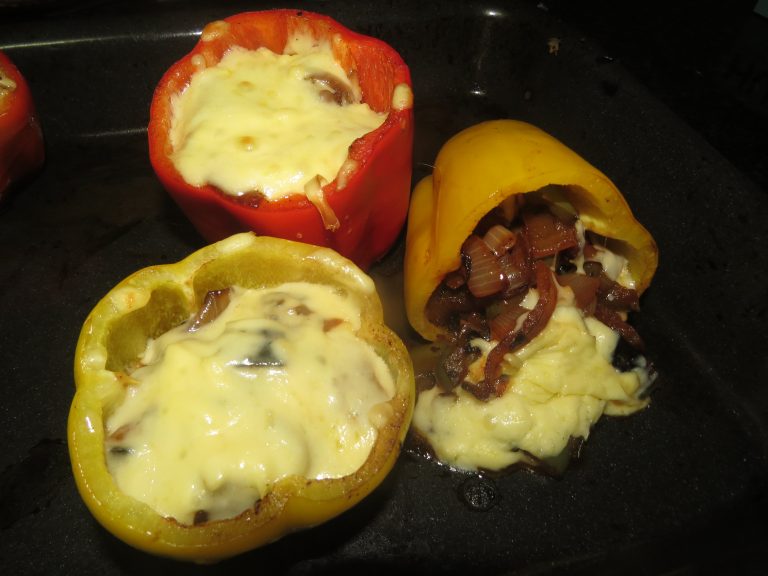
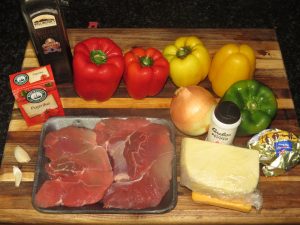 Soetrissies:6 rooi of geel soetrissies
Mozzarella kaas (gerasper of in ringe gesny)Sny die soetrissies bo oop en haal pitte uit. Vul nou met vleis, dan uie en dan Mozzarella kaas in lae en herhaal. Bak in oond teen 200*C vir 30min. Smaaklike ete!Oorspronklike artikel was in Ultimate Lifestyle Ed.5
Soetrissies:6 rooi of geel soetrissies
Mozzarella kaas (gerasper of in ringe gesny)Sny die soetrissies bo oop en haal pitte uit. Vul nou met vleis, dan uie en dan Mozzarella kaas in lae en herhaal. Bak in oond teen 200*C vir 30min. Smaaklike ete!Oorspronklike artikel was in Ultimate Lifestyle Ed.5