As we look back through the day, we see wholesome and somewhat humorous postings on Facebook, of families finding creative and exciting ways to keep occupied. We will watch in anticipation to see how the next 20 days results in new ways to beat the boredom – perhaps resulting in a little more weight gain by many, as the snack cupboard gets regularly replenished.The Strauss family enjoying breakfast together on Day 1. (As posted on Facebook Group: 21 Days of Isolated Entertainment)Unfortunately, due to social circumstance, poverty, lack of education or whatever reason we associate with it – not everyone in our city is being quite so obedient to the lockdown requirements. Reports in both local and even national news are focusing on individuals and communities in George that seem to be oblivious to the dangers by continuing with their normal daily lives. Groups congregating on the streets as well public transport moving people to and from homes and the city center.As a member of Lions Clubs International and identified as a group that offers critical aid in disaster circumstances, I have the privilege of being aware of the processes and front-line support structures that are in place for now, and for the future.Our city is in capable hands! At a recent meeting we were briefed on what will happen if the situation spirals out of control – a worst-case scenario that we MUST prepare for. We do not want to be caught with our proverbial “pants down” and not have the infrastructure to cope with what could likely be hundreds or even thousands that need hospitalisation and quarantine in George. Although our own hospital can accommodate many, the need could arise for more beds – and for this reason, field hospitals are being planned and prepared.The reason for this lockdown is not simply one that sounded like a good idea by our government, it comes from much research and learning from other countries who are ahead of us in their fight against COVID-19, and if these professionals ALL recommend and support the lockdown, then surely we have to do out bit on the ground, by staying home and abiding by the law.Many have shared the viral hashtag, #Flattenthecurve – this does not mean we’re going to likely see the end of this pandemic soon, we are simply trying to control the infection rate, to give our hospitals and medical personnel the time needed to treat patients. A mass breakout of the coronavirus puts incredible strain on the professionals, whereas a slower, controlled rate gives even the patients a fighting chance with more focused attention.
The likelihood is that we will only see the peak of the infection in George in the next 2 to 3 months’ time – lets work together during this lockdown, before we see more strict measures put in place by government; we certainly don’t want to see martial law being implemented.Well done to our George officials who are handling the preventative and control measures – this is unprecedented times and your work is one that can only be commended.Carl van Blerk
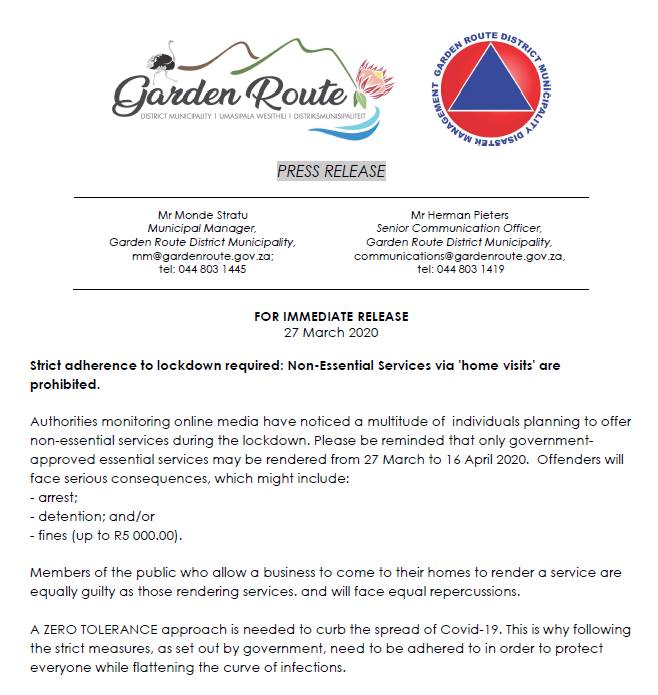
Strict adherence to lockdown required: Non-Essential Services via ‘home visits’ are prohibited.
Authorities monitoring online media have noticed a multitude of individuals planning to offer non-essential services during the lockdown. Please be reminded that only government approved essential services may be rendered from 27 March to 16 April 2020. Offenders will face serious consequences, which might include:
– arrest;
– detention; and/or
– fines (up to R5 000.00).
Members of the public who allow a business to come to their homes to render a service are equally guilty as those rendering services. and will face equal repercussions.
A ZERO TOLERANCE approach is needed to curb the spread of Covid-19. This is why following the strict measures, as set out by government, need to be adhered to in order to protect everyone while flattening the curve of infections.
George Municipality Municipal Manager Trevor Botha hereby confirms essential services delivery implications for the George Municipal area during the Covid-19 lockdown (midnight 26 March 2020 – midnight 16 April 2020).GENERALAll George Municipality administrative offices are closed, but essential services continue as stipulated below.All after-hours George Municipality emergencies: 044 801 6300Garden Route Disaster Management emergencies: 044 805 5071 (all hours)PROTECTION SERVICESFire 24-hour emergency services operate as usual.Fire emergencies only: 044 801 6311All after-hours emergencies: 044 801 6300The Traffic Department Office, Driving Licence Department, Motor Vehicle Registration and Vehicle Testing Stations will be closed. Driving Licence and Learner Driving Tests for this period will be postponed and applicants will receive SMS after lockdown to confirm new dates. The municipality awaits confirmation from the Western Cape Department Traffic Department regarding extensions of expiry dates on licences and related matters.Traffic and Law Enforcement Officers will assist with visible policing and support emergency units as required.CIVIL ENGINEERING SERVICESDelivery of essential water and waste water services continue as usual.Emergency street repair and stormwater problems caused by intense rainfall will be addressed by standby personnel.Please report water leaks and burst pipes, sewerage blockages, leaks and spillages and urgent road and stormwater issues to:044 801 9262/6 (7.45am-4.30pm)044 801 6300 (after hours)Contact information for water and sewerage emergencies in Uniondale/Haarlem will be communicated to residents directly.Estimated response times are 24-48 hours from recorded time of complaint at the above numbers.Civil Engineering Services administration offices will be closed during lockdown.ELECTROTECHNICAL SERVICESGeorge Municipality will make every effort to provide uninterrupted electricity to communities that are legally connected to the network during the lockdown period.Planned maintenance will be on hold and therefore no planned power outages have been scheduled for this period.Please report power outages, broken street lights and faulty traffic lights to:044 801 9222 (7.45am-4.30pm)044 801 9202044 801 6300 (after hours)Contact information for electricity emergencies in Uniondale/Haarlem will be communicated to residents directly.Estimated response times for low voltage electricity should be within 24 hours from recorded time of complaint at the above numbers, high voltage electricity faults could take longer.Estimated repair time for street lights are 5-10 working days from recorded time of complaint at the above numbers.Electrotechnical Services administration offices will be closed during lockdown.COMMUNITY SERVICESBlack bag refuse removal remains as per the usual schedule (please see below).Blue and green bags will not be collected due to the private service provider being in lockdown.If possible, please continue to recycle and keep blue bags for collection after lockdown ends, otherwise place in black bags. Please continue to put garden waste into green bags and store at home until end of lockdown.Refuse removal on public holidays in the lockdown period will be as follows:10 April Good Friday – refuse will be collected on Thursday 9 April13 April Family Day – refuse will be collected on Tuesday 14 AprilCollections start at 7am and may extend into the night to accommodate the double schedule.Refuse Removal DaysMonday: Blanco, Riverlea, Heatherpark, Heatherlands, Glen Barrie, Kraaibosch, Groenkloof, Blue Mountain Village, Herold’s Bay, Victoria BayTuesday: Levallia, Rosemoor, Conville, Protea Park, Parkdene, Ballotsview, Borchards, Lawaaikamp, Thembalethu, Wilderness, Touwsranten, Constantia KloofWednesday: Camphersdrift, Fernridge, Denneoord, Bo-Dorp, Blommekloof, Tweerivieren, Hoogekraal, HoekwilThursday: Dormehlsdrift, George South, Le Grand, Bos en Dal, Groeneweidepark, Sinksabrug, Herold, Geelhoutboom, Eselsjacht, Hansmoeskraal, Jonkershoek, Rooirivierrif, Pacaltsdorp, Rosedale, WaboomskraalFriday: Glenwood, Loerie Park, Eden, Genevafontein, Denver Park, Bergsig, Eastern ExtensionApplicable business: Monday, Wednesday and FridayReport uncollected black bags to 044 801 6300.Waste dumping at the landfill site will be strictly controlled and only two vehicles allowed on site at any time. Only businesses on the essential services list will be allowed and limited to two loads a day.Only municipal vehicles, the blue bags service provider and businesses on the essential services list will be allowed into the transfer station and only two vehicles allowed on site at a time and limited to two loads a day.Street cleaning crews will operate in and around the CBD and entrance roads to the city at selected hours, seven days a week.Public toilets are closed until further notice as per the national directive.Illegal dumping will be attended to as per the usual schedule. The municipality appeals to communities to remain safe and not dump illegal waste, which can be hazardous to their health.Cemeteries are open for funerals only and as per pre-arrangement with the municipality (funeral directors to contact via WhatsApp group), will be restricted to 50 mourners, limited to 30 minutes and mourners required to observe recommended hygiene practices as per Covid-19 guidelines and protocols. No busses allowed. No night vigils allowed anywhere at any time.Sport facilities are closed, and security remains in place to protect facilities. The municipality has made a facility temporarily available for social welfare purposes.Social DevelopmentThe municipality continues to support 130 municipal soup kitchens. Strict social distancing and hygienic practices apply.The municipality is working with the Western Cape Department of Social Development to address matters arising with people living on the streets.Social Development administration offices will be closed during lockdown. Emergency essential social services enquires to Sophie Fanelo 072 693 3488.Libraries remain closed until further notice.Community Services administration offices will be closed during lockdown.CORPORATE SERVICESCorporate Services administration offices will be closed during lockdown.Area offices will be closed but urgent essential services in areas during office hours as below and 044 801 6300 after hours.Blanco: 065 907 6647Conville: 078 610 9482Pacaltsdorp: 073 834 2256Protea Park: 084 097 2471Rosedale: 073 071 0849Rosemoor: 083 661 3655Touwsranten/Wilderness/Kleinkrantz: 078 372 5843 Thembalethu: 082 704 3491HUMAN SETTLEMENTSFor basic services (water and sanitation) emergencies in informal settlements, please phone 044 801 9183 and/or 044 802 2026.For water leakages (indigent cases), please phone044 801 9453.For assistance with emergency structures following disaster (fire, flooding etc), please phone 044 802 2029.Human Settlements administration offices will be closed during lockdown.PLANNING AND DEVELOPMENTNo essential services applicable. George Tourism, Local Economic Development, Building Office, Town Planning and all other administration offices closed during lockdown.FINANCEDue to the closure of printing companies during lockdown, printed consumer accounts that would have been posted during the first week of the month will only be posted after lockdown (17 April 2020) – please pay the same amount as per your February 2020 service account. Online accounts via email are not affected and George Municipality Mobile App subscribers can access new statement amounts by 27 March 2020.No interest will be levied for April 2020. Accounts can be paid via electronic transfer (EFT), and other methods as listed below. No meter readings will take place for the month of April and estimations will be used to calculate related rates. Meter readings can be emailed to george@ikaparetic.co.za or george2@ikaparetic.co.zaBank Details for electronic paymentABSA BankAccount Name: George MunicipalityAccount Number: 010 2222 0981Branch Code: 632005Reference: your GRG account numberProof of payment to be sent to payments@george.gov.zaPrepaid Electricity purchaseswww.prepaid24.co.zawww.itronenergy.co.zawww.ipay.co.zaThe electricity token is automatically sent to the client via sms or email.Mobile Apps belonging to banks also have pre-paid electricity purchase function.Email queries to creditcontrol@george.gov.za. Please include the relevant prepaid meter number in correspondenceGeneral enquiries to accounts@george.gov.za084 830 5882 or 084 769 5635
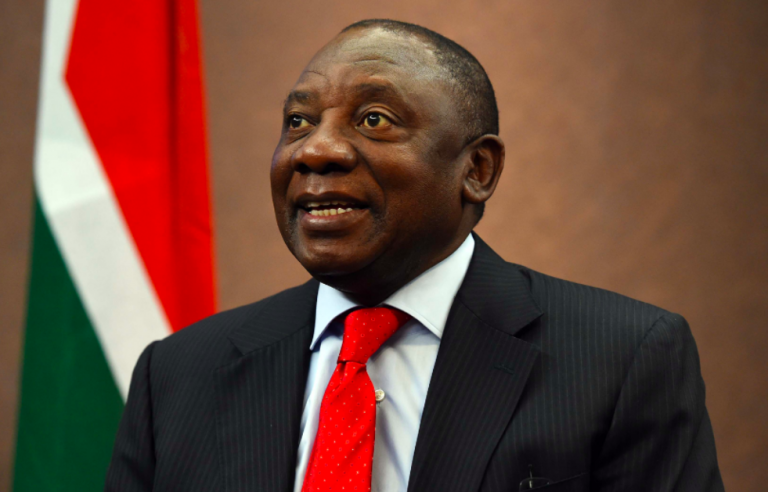
from: The Presidents websiteOn the eve of the 21-day national lockdown to halt the spread of the coronavirus pandemic, President Cyril Ramaphosa has invited all South Africans to take part in a National Day of Prayer wherever they are.The President has, following discussions with religious leaders, called on citizens to observe two minutes of prayer, reflection or silent meditation on Thursday 26 March 2020 between 18:00 and 18:30 hours. The President says this is the moment when South Africans need to act together as one patriotic nation in solidarity with all those affected or impacted by COVID-19, not just in South Africa but around the world.“These are challenging times. We are traversing a path we have never travelled before. There are many amongst us who are fearful, uncertain and vulnerable. I call on our people to offer a prayer and a thought for the protection and healing of our land and its people from this disease,” President Ramaphosa said.“Over the past two weeks, South Africans from all walks of life have demonstrated their resilience by complying with the restrictions that have been placed on their lives. Because we are in a state of national lockdown our prayers must be offered from our hearts and in our homes,” President Ramaphosa said.The national day of prayer comes in response to a proposal made by interfaith leaders who met with the President last week to express their support for the national effort to contain the spread of the coronavirus. National prayer days have been held in a number of countries this week, including parts of the US, UK, the Philippines, Kenya, Mexico and Italy.“The international occurrence of the coronavirus pandemic has affirmed yet again that the challenge we face is a global one and one we cannot overcome alone,” President Ramaphosa said. “I call on all our people, whether they are religious or not, wherever they are, on Thursday the 26th of March to observe a moment of silence in a show of social solidarity,” said President Ramaphosa.The President said the nation’s thoughts should particularly be with those in hospital, quarantine or self-isolation. “In observing this National Day of Prayer we also want to send a message of hope to our brave and patriotic health care workers who are on the frontline and helping to save lives, with our emergency personnel, police, traffic officers and military, and with all those who are working tirelessly to keep us safe, healthy and alive. The media has been exemplary in keeping our people well-informed about the work of government in dealing with this pandemic,” President Ramaphosa added. President Ramaphosa said the hardships imposed by a national lockdown were considerable.“The coming weeks will sorely test our resolve and patience. For millions of South Africans for whom faith is a source of hope and courage, this difficult time must strengthen and unite us as never before.”The President called on citizens to demonstrate their solidarity with fellow South Africans by displaying our inspiring national flag on social media (#PrayForSouthAfrica), outside their homes and other prominent places as an act of compassion and unity during the national lockdown. Enquiries: Khusela Diko: Spokesperson to the President on 072 854 5707Issued by: The Presidency of the Republic of South AfricaPretoria
TALKING POINTS: 21 DAY NATIONAL LOCKDOWN COVID-19
Press release from GovernmentA 21-day national lockdown has been declared.
The lockdown will begin on the evening of Thursday 26 March 2020 at 23:59.
The lockdown will remain in force for 21 days.
All South Africans will have to stay at home until midnight on Thursday 16 April 2020
The categories of people exempted from this lockdown are as follows:
Health workers in the public and private sector,
Emergency personnel,
Security services – such as the police, traffic officers, military medical personnel, soldiers and,
Other persons necessary for our response to the pandemic.
It will also include those involved in the production, distribution and supply of food and basic goods, essential banking services, the maintenance of power, water and telecommunications services, laboratory services, and the provision of medical and hygiene products.
Will I be able to leave my house?
There is no need for panic, as lockdown does not mean a shutdown.
People will still be allowed to get to shops and access essential goods and servicesbut in small numbers.
It is up to all of us to minimise our movement.
Only undertake essential trips outside your home such as to get food, seek medicalcare or access supplies.
When leaving your home try and go out alone, plan your trip and get in and out of your destination as quickly as possible.
Practice hygiene when you go out, wash your hands when leaving home, do so again at your destination and before you depart for home.
What about homeless people and those who cannot self-quarantine?Temporary shelters that meet the necessary hygiene standards will be identified forhomeless people.
Sites are also being identified for quarantine and self-isolation for people who cannot self-isolate at home.
We are all in this together
All sectors and citizens are working well together to fight the Coronavirus and we must continue to do so.
Aggressive containment measures are essential to ensure that the virus does notspread any further.
Please continue to exercise caution and avoid unnecessary travel.
We call on everyone to cooperate with government and other sectors to implement the measures.
What services will remain open?
Most shops and businesses will be closed.
The police, metro police, military and emergency services will continue to operate.
Health care services such as hospitals, clinics, doctors, pharmacies and laboratories will remain open.
Banks and essential financial and payment services, including the JSE will remainopen.
Supermarkets will remain open so that citizens can continue to care for themselvesand their families.
Petrol stations will remain open.
Companies that are essential to the production and transportation of food, basic goods and medical supplies will remain open.
We are expanding efforts to contain the virus.
This nationwide lockdown will be accompanied by a public health managementprogramme which will significantly increase screening, testing, contact tracing andmedical management.
Community health teams will focus on expanding screening and testing where people live, focusing first on high density and high-risk areas.
South African citizens and residents arriving from high-risk countries will automatically be placed under quarantine for 14 days.
Non-South Africans arriving on flights from high-risk countries will be turned back.
International flights to Lanseria Airport will be temporarily suspended.
International travellers who arrived in South Africa after 9 March 2020 from high-risk countries will be confined to their hotels until they have completed a 14-day period of quarantine.
A number of economic interventions are being put in place.
We have set up a Solidarity Fund, which South African businesses, organisations and individuals, and members of the international community, can contribute to.
The Fund will focus efforts to combat the spread of the virus, help us to track thespread, care for those who are ill and support those whose lives are disrupted.
The Fund has a website – www.solidarityfund.co.za – and contributions can bedeposited via the fund.
The Fund will be administered by a reputable team of people, drawn from financialinstitutions, accounting firms and government.
To get things moving, government is providing seed capital of R150 million and theprivate sector has already pledged to support this fund with financial contributions.
We will be spending money to save lives and to support the economy.
We must applaud the commitment made in this time of crisis by the Rupert andOppenheimer families of R1 billion each to assist small businesses and theiremployees affected by the coronavirus pandemic.
We are assisting businesses.
We will be assisting businesses in the informal sector such as spaza shops.
Registration is now open, on www.smmesa.gov.za, for small and medium-sizedbusinesses that require help during the coronavirus crisis.
The department of Small Business Development has a debt-relief fund for smallbusinesses.
Small businesses affected by the outbreak of the coronavirus will be required toproduce proof of negative impact as a result of COVID-19.
We will further be assisting small businesses to avert job losses through the SmallEnterprise Development Agency (SEDA).
Government has urged malls and retailers to consider rent and payment holidays to tenants negatively affected by the lockdown.
There is no need to stockpile food.
Government calls on everyone in the country to avoid panic buying.
We are aware that many South Africans are worried about the impact of thecoronavirus on essential supplies and food in the country.
As government, we are doing everything we can to ensure that we have enough food and all essentials we need.
Government has had discussions with manufacturers and distributors of basicnecessities, who have indicated that there will be a continuous supply of these goods.
Let us be considerate and responsible to ensure that we have enough for everyoneespecially the most vulnerable in our society.
Our social safety net remains in place.
All grants will continue to be paid.
To alleviate congestion at payment points, old age pensions and disability grants will be available for collection from 30 and 31 March 2020, while other categories of grants will be available for collection from 01 April 2020.
All channels for access will remain open, including ATMs, retail point of sale devices, Post Offices and cash pay points.
Let us stand and face this together.
The actions we are taking will challenge us as a nation.
But we are convinced that the cost of not acting now would be far greater.
In the days, weeks and months ahead our resolve, our resourcefulness and our unity as a nation will be tested as never before.
Let us all play our part and ensure that we emerge stronger and more united.You are not alone!
It is important that you stay connected via the phone, social media or email.
Maintain your networks and speak to friends or family regularly.
Keep doing enjoyable and relaxing activities such as reading, pc, board or card games, social networking or watching television.
Stay informed by getting the facts, not rumours or fake news.
Engage children in your care in creative ways; create fun learning activities, playgames and try to keep their daily routine going.
Stay active by doing simple exercises within your home or garden.
Or create an exercise plan specifically to suit your environment.
Pioneers in the motor industry from the start the Citroën brand can be called many things, but never ordinary. The futuristic Citroën DS was designed over 18 years and launched in the 1950’s. Noted for its aerodynamic, futuristic body design and innovative technology like hydropneumatic self-levelling suspension, the DS set new standards in ride quality, handling, and braking, the latter as the first mass production car equipped with disc brakes. Citroën sold 1,455,746 examples and, in September 2009, the DS was named the most beautiful car of all time by Classic & Sports Car magazine.
The Citroën DS’ history and pioneering tech is well documented. It sported several world firsts, including self-levelling suspension, swiveling headlights and modern disc brakes. The DS however followed another, equally impressive and pioneering Citroën, the Traction Avant.
The Traction Avant, French for front-wheel drive, was a range of mostly 4-door saloons and executive cars, with four or six-cylinder engines, produced from 1934 to 1957. The Traction Avant pioneered mass-production of three revolutionary innovations widely adopted since, and still used today: front-wheel drive, four-wheel independent suspension, and the use of a crash resistant,unitary, monocoque body. Additionally, the car was one of the earliest mass-production adopters of rack and pinion steering.
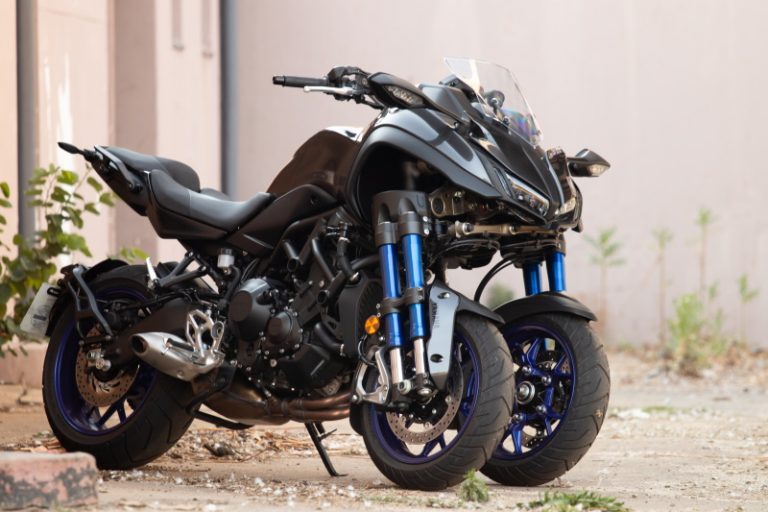
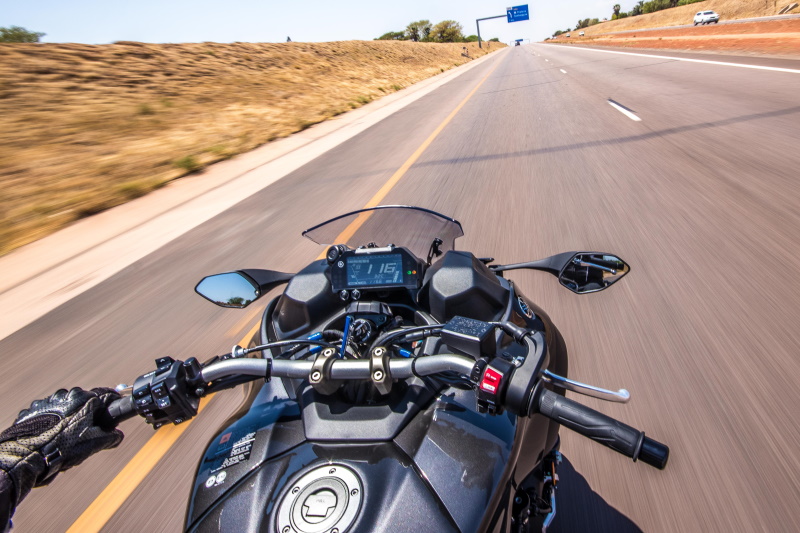
In Europe, the sight of a scooter with two front wheels is not that odd. There are quite a number of manufacturers who have adopted that design and one of them is Yamaha. They produced the 125 cc Tricity that was available in South Africa not so long ago. Now Yamaha has gone and stuck two front wheels on the MT-09 and the result is the radical Yamaha Niken.
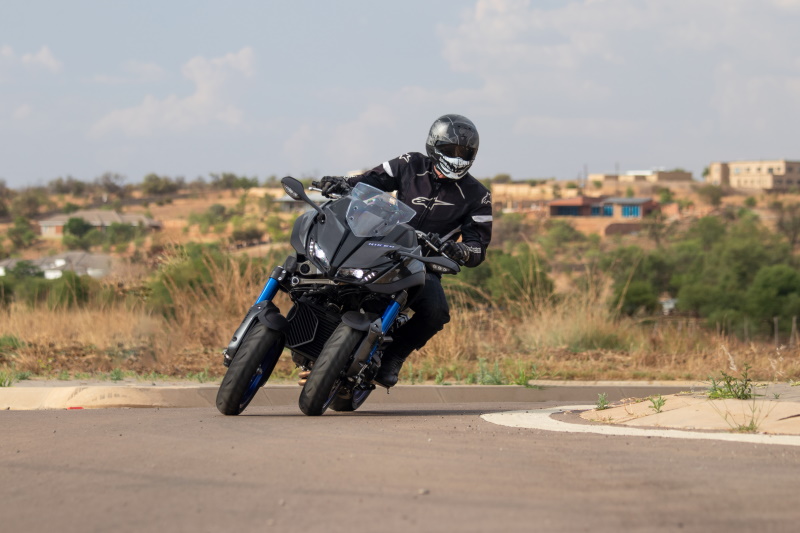
The bike has the same three-cylinder 847 cc engine from the MT-09, but I only was asked once what size the engine is. Everywhere I stopped with the Niken, a crowd soon gathered and I had to field questions about the complicated front-end setup. Everyone wanted to know how the Niken handles and rides with it. The answer is simple – just like a regular motorcycle!
Looking at the front, the Niken has four fork legs, two on each side. The leading forks are inert and add rigidity and stability to the front. The trailing set handles the damping. At the top there are two parallelogram arms, attached to the two steering heads. This means that the wheels lean in unison, but they work independently to absorb bumps. The front wheels are only 15” units and each one has a 298 mm disc. The rear of the Niken gets a wider tyre and larger disc at the back to make up for the smaller front discs.
Sitting on the Niken, you are fully aware of the large shroud over the front suspension. At first it felt ungainly, but when I realised that the Niken is only about 4 cm wider than the MT-09, my trepidation about lane-splitting disappeared. My mind was also playing tricks on me. I wanted the Niken to feel different when riding and yet I was only aware of the extra wheel at low speeds. The engine pulls strongly and the quick-shifter worked a treat, provided I was very aggressive with the throttle.
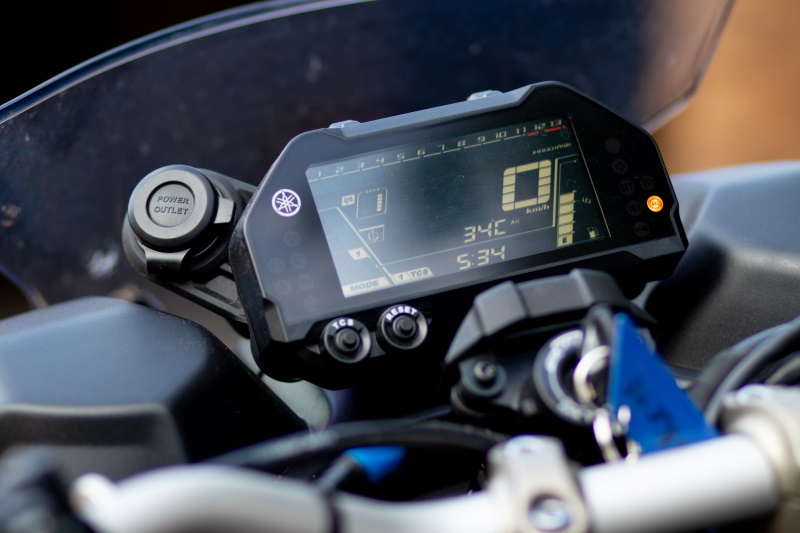
Where the Niken really shines is with stability. You would think that the two front wheels will make the bike planted through corners, and you would be absolutely right. But that is not all. Riding in a serious crosswind, I was surprised at how stable the Niken is. The Niken is fitted with cruise-control and will therefore make a very good sports-tourer. I will just fit a taller windscreen as the standard one is not very effective.
Say what you want about the Niken, but it is an amazing motorcycle that you have to ride to appreciate and understand.
And the price? The Niken would set you back around R275 000.
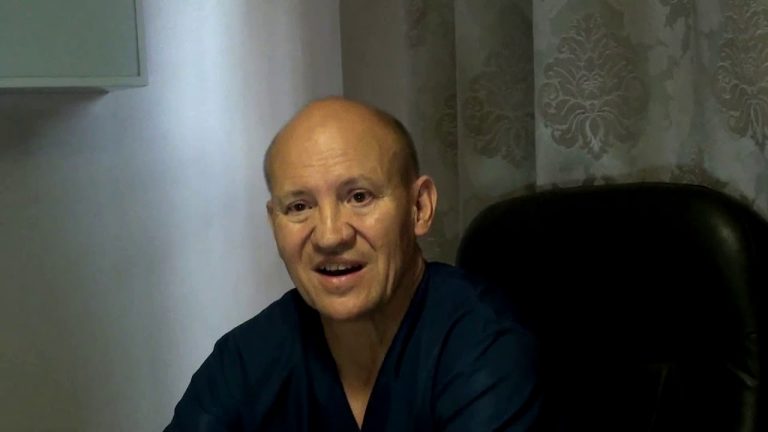
Prof. Anton was scheduled to talk to the community at PvR community church on Wed. 19 March 2020 but that had to be cancelled. Due to the cancellation we recorded an interview with Prof. Anton to get a better understanding of the pandemic, how it spreads and how to best avoid contracting the disease. It was a very insightful talk and we thank him for making time in his schedule for us, and arming us with knowledge.NB! To anyone viewing this Video
Please note that I shared the video as a public service to assist the effort of informing the community about Covid-19. I am not a health worker and is not in any position to give any advice other than what has been presented in the video by Prof. Anton Stoltz. I will thus not engage personally in any debate.The Health Department’s emergency hotline number is 0800 029 999 – (Health Department’s Website)
or
Whatsapp support line for Covid-19 is 0600 123 456Prof. Anton Stoltz
UP ISMC Management Committee member
Researcher
Head of Infectious Diseases; Steve Biko Academic Hospital
Department: Internal Medicinehttps://www.youtube.com/channel/UCz_7uv7zmtKykIHQw0wCV6Q