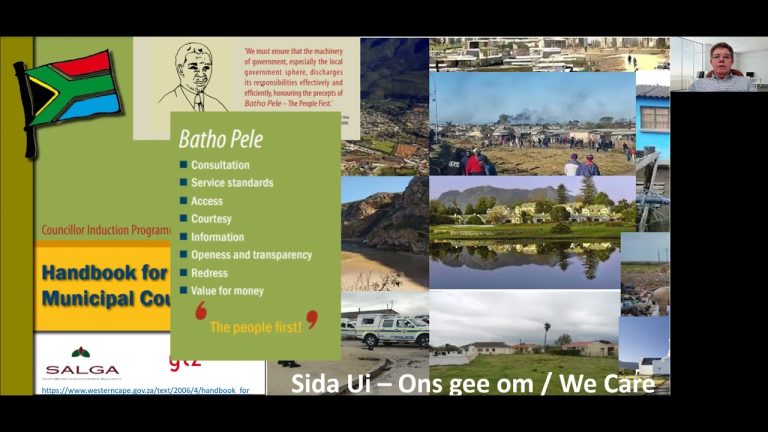



Consider the core leadership and related competencies of Candidate Councilors before you vote. Know what the responsibility of Local Government is to keep them accountable
“A dynamic initiative…” – Best description of Mastering It.
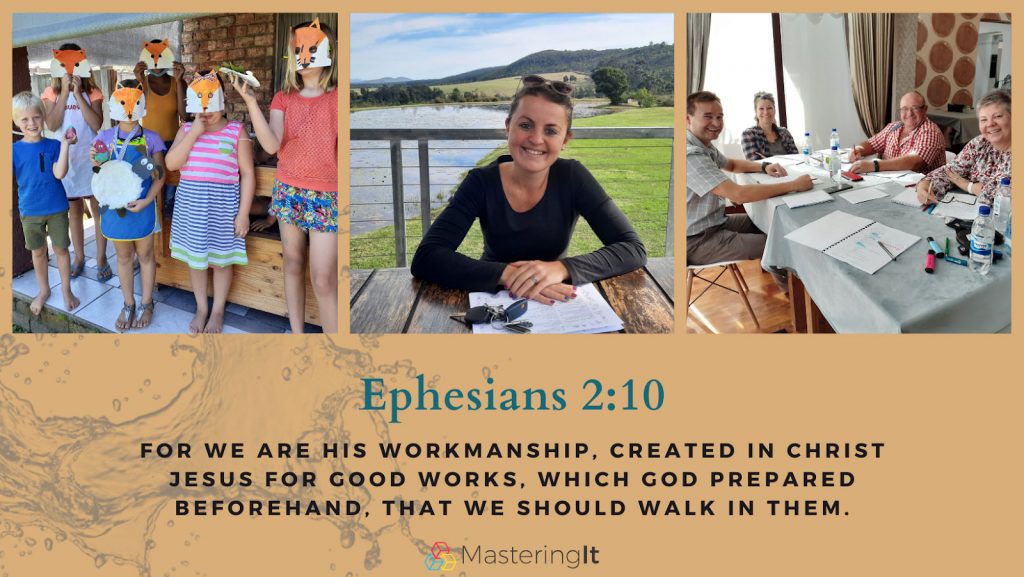
Mastering It, a business that was started January 2020 to offer people a platform that empowers them to master their own Education, Life and Career prospects. We have a passion to see people get equipped and/or people sharing their knowledge and skills with others!
As the owner and founder, Maryke Jooste, would say:
“We are all on the journey of lifelong learning, whether we want to be or not and whether we are engaging in it or not. Growing up and going to school, many of us didn’t learn necessary skills for our education, life and/or career. How to do our taxes, how to build up a good credit score, how to buy property… Instead we tried to imitate what we had observed others doing or how we thought things should work. It’s a case of trial and error and figuring things out as we go along.
But wouldn’t it be better to be connected to people that can advise and help?
People that have gone through the journey, made mistakes and have lessons we can learn from?
It’s a biblical value and blessing to rather do life together than on our own!
I wouldn’t want to do life in any other way.”
There are many aspects of an individual that never stop growing and developing – our intellect, knowledge base and skill set. We all can improve and give back in these aspects!
Therefore, at Mastering It, we partner with a variety of people that are experts in their field and want to assist others.
Our services ranges from:
– Extra classes & Study Skills classes
– Life Coaching & Life skills workshops
– Career Aptitude Tests & Career Coaching
Services are available for different age groups, can be done face to face or online and are flexible to adapt to different people’s schedules!
Because of COVID-19 we also started with outdoor Zumba and Primary sport sessions. This is great fun and a great way to get to meet other people with similar interests to yourself!
We are passionate about people and will continue to invest in them!
Feel free to browse around on our blog, a newly started initiative (June 2021), where we share tips, insights and encouragement for your Education, Life and Career ventures! We are looking forward to sharing the journey with each one of you!
Original News24 Article
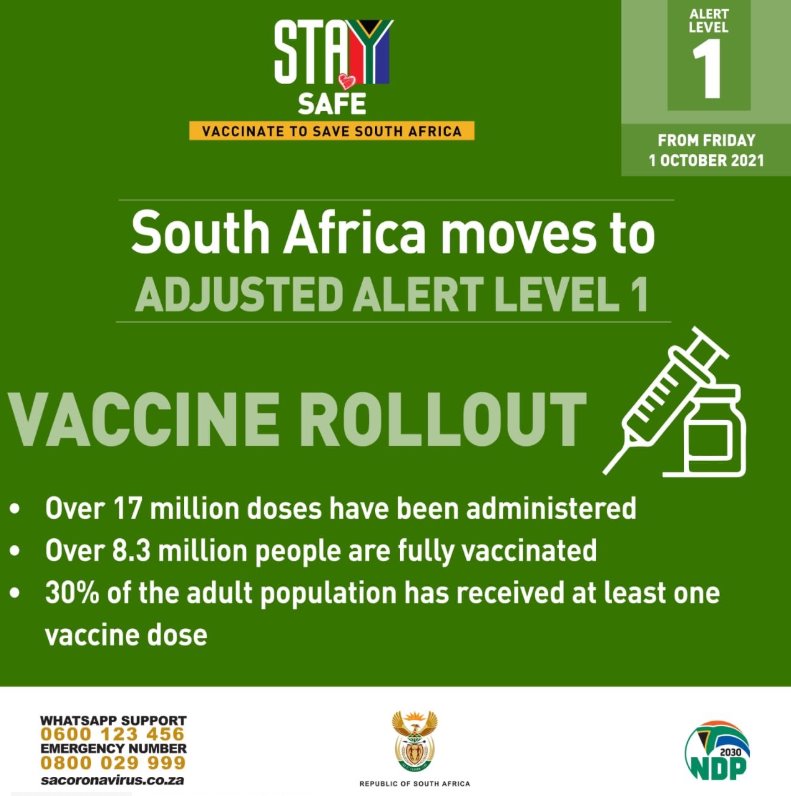
News24 reports that President Cyril Ramaphosa announced on Thursday evening the country will move to adjusted Level 1 lockdown, starting at midnight.He also said the government would also be implementing a vaccine certificate.
This means the following regulations will be in place:
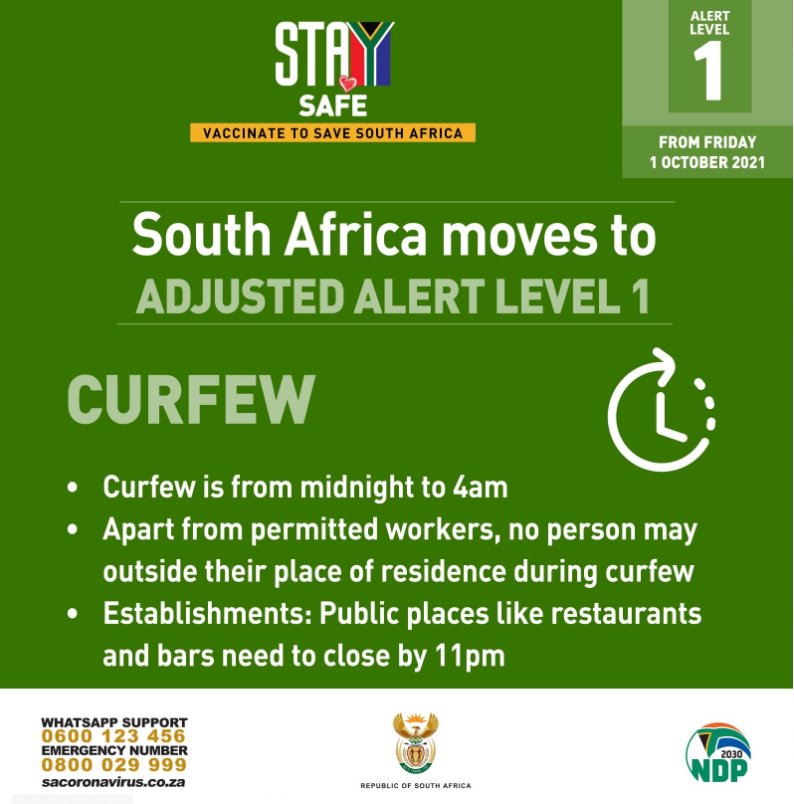
The curfew will be from 00:00 to 04:00.
Non-essential establishments like restaurants, bars and fitness centres will need to close by 23:00 to allow their employees and patrons to travel home before the start of the curfew.
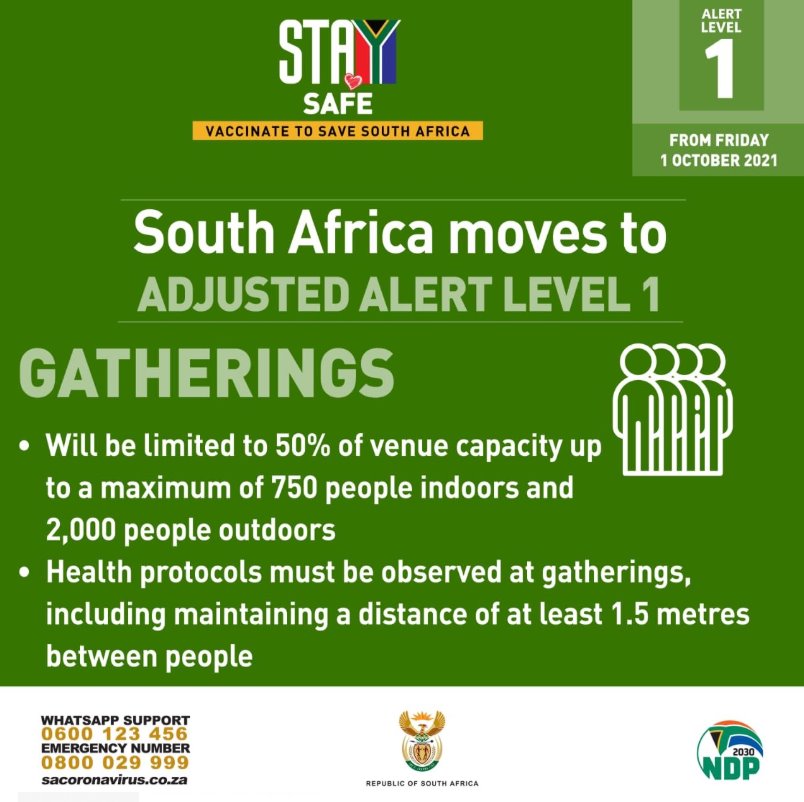
The maximum number of people permitted to gather indoors will increase from 250 to 750, and the maximum number of people permitted to gather outdoors will increase from 500 to 2 000. Where the venue is too small to accommodate these numbers with appropriate social distancing, then no more than 50% of the venue’s capacity may be used. This includes religious services, political events and social gatherings as well as restaurants, bars, taverns and similar places.
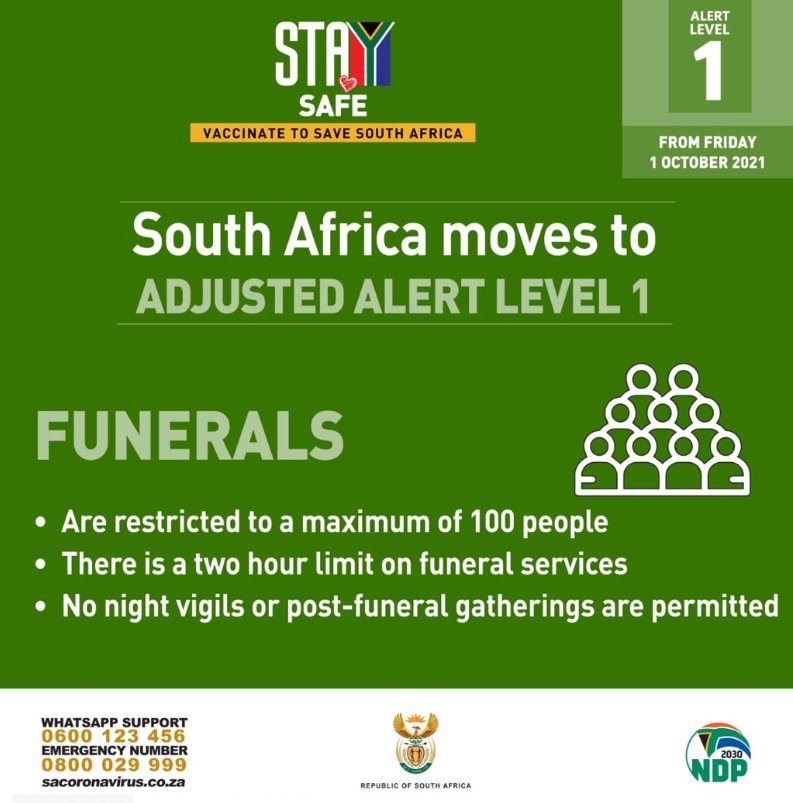
The maximum number of people permitted at a funeral will increase from 50 to 100. As before, night vigils, after-funeral gatherings and after tears gatherings are not allowed.
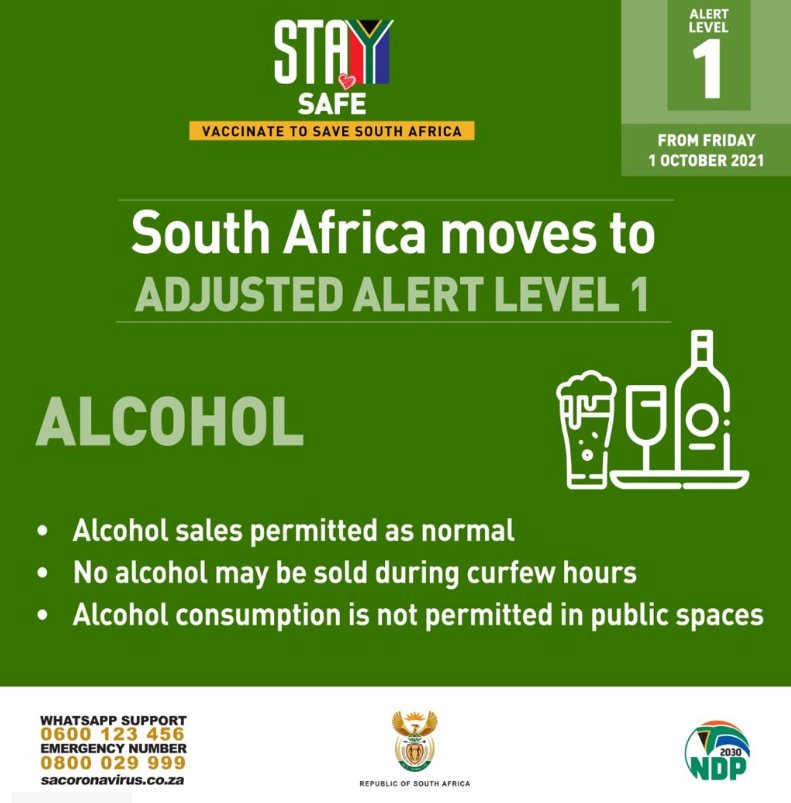
The sale of alcohol – for both off-site and on-site consumption – will be permitted, according to normal licence provisions. However, no alcohol may be sold after 23:00.
The wearing of masks in public places is still mandatory, and failure to wear a mask when required remains a criminal offence.
Ramaphosa said as part of the effort to return the most-affected parts of the economy to operation, the government was looking at the further relaxation of restrictions, particularly with respect to sporting and cultural events.
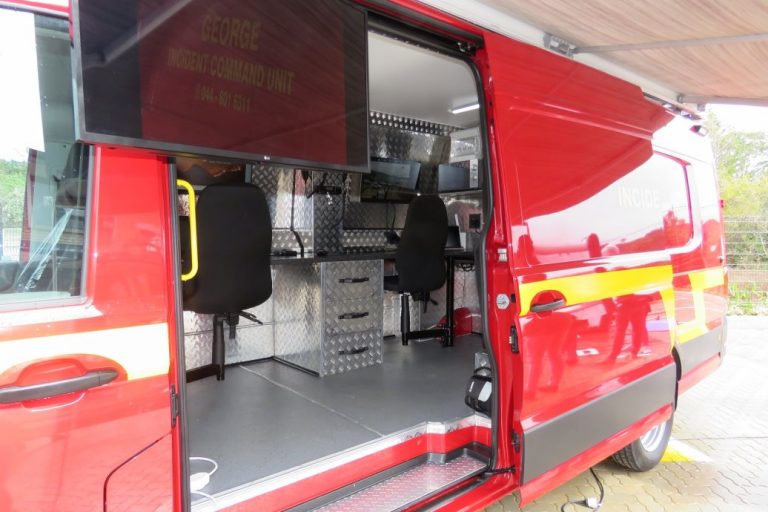
George Fire and Rescue has taken delivery of a state-of-the-art mobile incident command unit that will be used to manage administration and support on the scene of a crisis, disaster or rescue situation.“The custom-built minibus is effectively a mini crisis command centre that can collect and distribute real-time data that will empower decision makers and roleplayers that are not on the scene to respond appropriately to a given situation,” said Chief Fire Officer Neels Barnard.“The diverse circumstances of the George municipal area often result in extraordinary emergency situations that range from mountain, cliffside and sea rescues and recoveries to runaway fires, floods, wind damage and more. Most of these happen far from crisis centre hubs, which require constant scene-to-management feedback and updates which in turn draws essential emergency workers off site and away from the important work of saving lives and property.“The Type-3 mobile command unit is equipped with technology that bridges the gap so that emergency personnel can stay on site and get on with their work, while providing online, real-time information and footage to decisionmakers that support and finance the work on the ground.“The communications capacity also means the ability to synchronise multi-agency situations that require communication to Joint Operations Centres, government roleplayers and other stakeholders almost anywhere in the world.”The unit can be set up almost anywhere in a short timeframe. It is the first of its kind in the country with a super-high roof to allow for standing room and additional above-counter space. The technology onboard includes two computerised workstations, radio frequency transceivers and internet access, an electric generator and solar panels, and a fixed camera with live footage capability to allow remote monitoring.It can operate in an environment with little or no basic facilities, including no electrical service and phone lines, and has own power generation capacity to operate independently for at least three days.The back section of the vehicle incorporates a Type-3 hazardous materials response unit with a mobile decontamination unit, hazardous materials suits and equipment for detecting chemicals, harmful gasses and radiation.The vehicle was financed with Western Cape grant funding and kitted out using municipal funds. “We are grateful that provincial government and Council recognise the diverse challenges of firefighting in the George Municipality and surrounds. We continue to see the significant difference it makes in the field where lives and properties are saved every day,” said Mr Barnard.
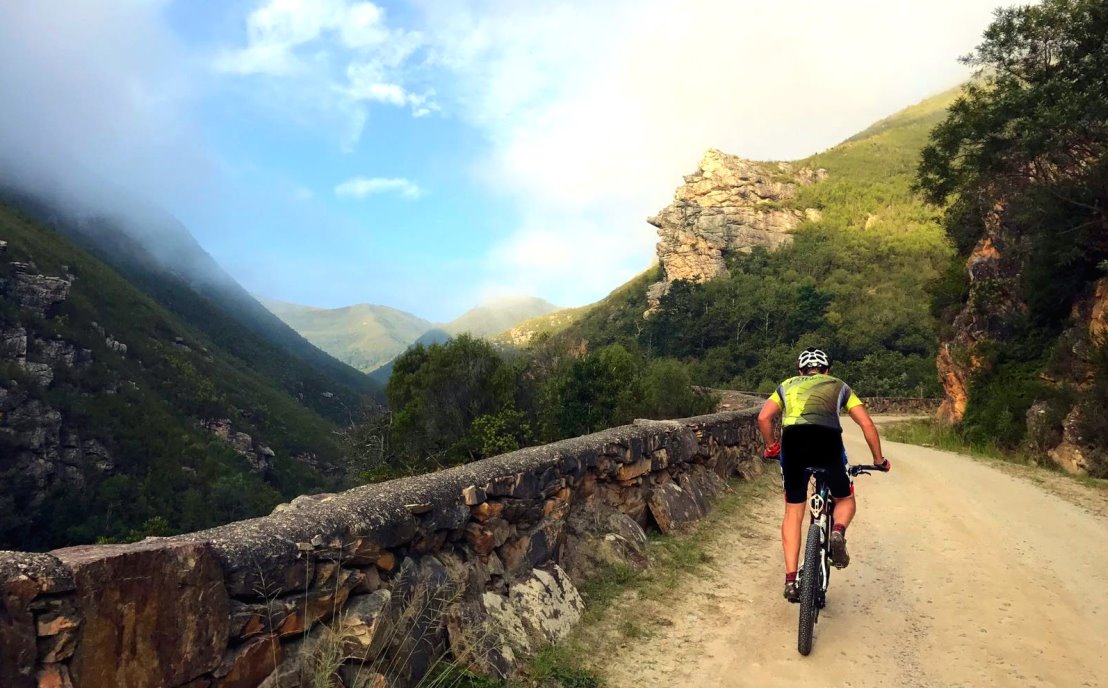
George has always been known as a beautiful place and superb golfing destination but has one more feather in its cap to be very proud of.Through the George Trails tourism project George can now boast with SA’s (and probably Africa’s) largest and most diverse mountain biking, trail running and hiking route network totalling more than 2300km across 100 different routes.Apart from its size it is also the most diverse. Nowhere else in the country will you find beaches, mountains, plantations, indigenous forest, rivers, dams, farmlands, and Karoo within 20km of a city/town centre.Warren Moult (creator of the No Shortcuts mountain biking group) and Werner Rall (founder of George Trails) enjoying a mountain bike ride around the beautiful Garden Route Dam area.Expansion ProjectGeorge Trails was founded in 2015 and is a project by the Green Sport Foundation non-profit organisation, which was also started in George. Last year the organization sourced funding from the Western Cape Government and George Municipality to market George as a trail-tourism destination, expand the route offering and contribute to trail maintenance. This enabled the organization to financially support the local trail maintenance efforts of the Hillbillies Mtb Club and Garden Route Trail Running (GTR) over the past five months.The website was upgraded, and marketing efforts are ongoing. All routes are downloadable for free from the website www.georgetrails.org.za for navigation on GPS devices or smartphones. The website is also an incredible resource for information about the great outdoors around George. A variety of local role players were involved in the expansion project and around 20 jobs were created.My Trail TownGeorge Trails forms part of Green Sport’s My Trail Town concept and is the alpha project. My Trail Town aims to launch in early 2022 and offer towns and cities across SA and the World the opportunity to use their local trails as a sustainable tourist attraction. When packaged and marketed correctly outdoor infrastructure such as trails can be a major attraction in lifestyle choices for people looking to relocate and holds many economic benefits. All whist leading to a healthier community.Responsible UseAs more people use George’s natural playground it is very important to respect landowner and conservation rules. George Trails advocates a variety of guidelines on the website for the safe and responsible use by the public of the trails, although this is not prescriptive in any way. The public is urged not to litter and to conserve fauna and flora.What it means for our townJoan Shaw, George’s Tourism Manager had the following to say: “George Municipality through its Tourism Section partnered with George Trails to facilitate this trail maintenance and marketing, as we see trails – for hiking, trail running and biking – in this diverse natural environment, as one of the unique features that George has to offer. This is demonstrated in the vast quantity and the high quality of our trails that extend from the mountains to the ocean, encompassing all terrains in between. We are proud that we have SA’s biggest and most diverse network of this kind, on our doorstep.To strengthen our proposition, we also partnered with the George Mountain Ultra Trail (MUT) and South Africa’s best trail runner, Ryan Sandes, to promote these routes. During this event local teams were mobilised, and maintenance improved to keep users on the trails and not vary from the tracks to affect the surrounding natural areas, in so doing, promoting the attractions in an organised and responsible manner that cares for our environment and conserves our natural resources. We encourage the community and visitors to ‘take nothing and leave only footprints’ (or bike tracks) and enjoy the amazing trails at every opportunity.Leon van Wyk, Executive Mayor of George had the following to say: “We are fully supportive of the efforts to encourage the safe use of our George mountain trails by the public and look forward to having tourists experience the unique lifestyle that George offers.”Green Sport would like to thank the following individuals and organizations for their contributions to the George Trails expansion project: Johann Swanepoel, Joan Shaw, Marthinus Esmeyer, Jacques Mouton, Zane Schmahl, Richard Muller, Deidre Cloete, Hillbillies Mtb Club, Garden Route Trail Running (GTR) and Doughgetters Accounting.
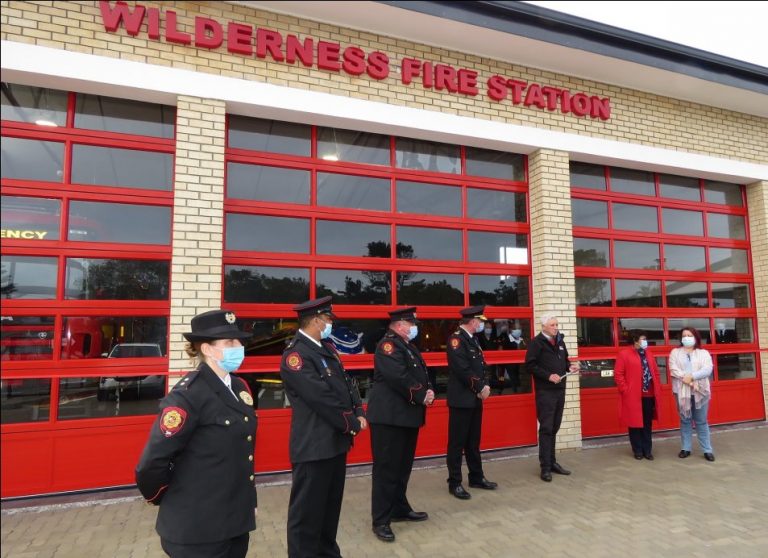
Wilderness area is now being served by its own satellite fire station, which was officially opened on Friday, 17 September 2021.Situated near the Caltex The Waves circle on the N2, the new station was built to serve the diverse fire and rescue needs of the area east of the Kaaimans River Bridge, which had until recently been addressed from the main fire station in the George CBD 14km away.George Chief Fire Officer Neels Barnard said a satellite station in Wilderness had been a long-term goal of the department to cover the area’s fire and rescue risks more effectively. “We now have quick and easy access to the N2 for vehicle accidents and hazardous materials spills, the Wilderness beach and lakes for water incidents and rescues as well as significant fire risks such as fuel stations, hotels, dense vegetation and agricultural land.”The Wilderness station is also the first in the Southern Cape to be a double-storey facility with a fireman’s pole.The 440sqm station comprises 348sqm bottom-floor space for vehicles and equipment and 92sqm above for staff quarters. It has three spaces for specialised vehicles including a major fire appliance, 4×4 off-road firefighting vehicle and a jetski, quadbike and rubber duck. The facility is manned around the clock by four firefighters.“There are many advantages of having a fire station in an expanding and diverse community such as Wilderness and surrounds, including the much faster response times to road accidents and fires. Its location next to the Wilderness police station is ideal as there are several overlapping services and administration between the SAPS and municipal emergency services during and after an incident.“The department is grateful to its Municipal Council for recognising the diverse fire and rescue needs that exist in the area and for supporting an ongoing programme to equip the Fire and Rescue department with specialised gear and facilities to continue protecting land and property.“We also thank donors Peter Grindlay and Mikaila Hendricks of Dotsure and Jenny Harding of Delightful Gardens for their contributions towards the interior design and beautifying of the Wilderness Fire Station,” said Mr Barnard.At the official opening George Executive Mayor Alderman Leon van Wyk commended Mr Barnard and his department for their pursuit of excellence. “I am very proud of their hard work – their persistence in continuance expansion of capacity will pay off for decades to come,” said Ald van Wyk.Wilderness is the municipality’s third satellite station in addition to Thembalethu and Uniondale.
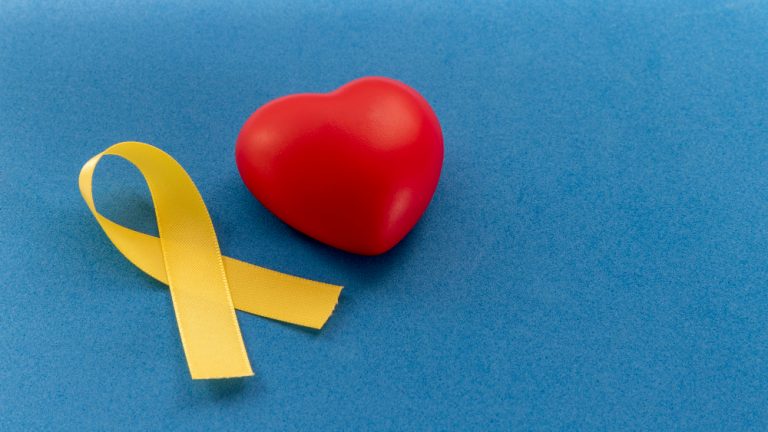
Friday 10th of September was World Suicide Prevention Day, and mental health services are available privately or through public health institutions to help reduce suicide risk. Persons with suicidal thoughts and their families do not have to suffer in silence.According to Janine Roos, director of the Mental Health Information Centre at the Tygerberg Campus of Stellenbosch University, it is important to encourage those who suffer in silence to get help if they think they are at risk of suicide.The true incidence of suicide and suicidal behaviour is unknown. Many suicides go unreported. The World Health Organization (WHO) estimates a million people worldwide commit suicide every year. Males are more likely to complete suicide than females, but females are more likely to attempt suicide. Suicide is an attempt to escape suffering that has become unbearable. Some conditions are associated with a higher risk for suicide, e.g., depression, alcohol and drug abuse and schizophrenia. Factors other than mental illness like sociocultural or economic influences are also implicated in the aetiology of suicide. The emotional impact of suicide on family and friends can last for many years.Interestingly, the first study on suicide during the COVID-19 pandemic found that the number of suicides decreased or remained unchanged despite the profound mental health consequences of the pandemic for many people. The study was done in higher-income countries where governments increased mental health services to support communities and mitigate the effects of lockdowns on mental health and suicide. The lack of reliable current suicide data from low- and middle-income countries makes it impossible to know what is happening in these parts of the world. As restrictions are lifted and we adapt to a new way of living, we should be cautious to support those feeling lonely and experiencing financial hardship.Prevention of suicide remains an important public health priority. It is estimated that for every completed suicide there are approximately 20 non-fatal suicide attempts. Most people who die of suicide exhibit warning signs. The person may say or think things like ‘I cannot think clearly; cannot see a way out; feel hopeless and without any energy’ and talk about death regularly. Studies have found that hopelessness is a strong predictor of suicide. Research also shows that those between the ages of 15 and 29 years are most at risk for suicide.Warning signs in teenagers include drastic changes in eating and sleeping patterns, drug and alcohol abuse, rebellious or reckless behaviour, neglect of personal appearance, expressions of having no reason to live and withdrawal from friends and family. Suicide prevention starts with recognising these signs and taking them seriously.“If someone close to you exhibits signs of suicide, be proactive and do not leave them alone. Remove guns, medication or anything that may be of danger. Reach out to them and offer your help. Be compassionate, non-judgemental, and caring, and try to get the person to professional help (general practitioner, psychiatrist, psychologist, social worker, or school counsellor).Encourage, support, and create opportunities so that the person can talk to you. Listening and talking honestly and openly about suicidal thoughts can help save a life,” Roos concluded.Break the silence; seek help!
Call 021 938 9229 or email mhic@sun.ac.za for the public or professionals in the whole of Southern Africa.
Suicide Crisis Line: 0800 567 567
Lifeline National Counselling Line: 0861 322 322
Mental Health Information Centre of SA: 021 938 9229
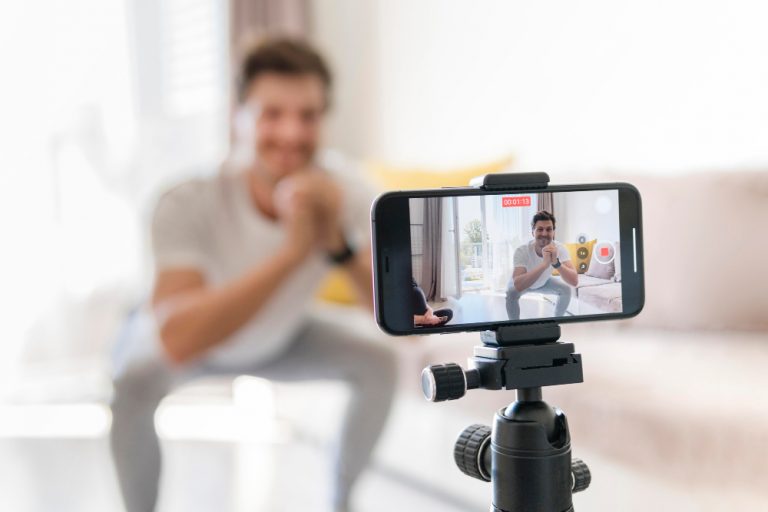
Getting started with videobloggingVideoblogging is the next generation of posting ideas and products over the internet. Everybody knows about textblogging. Now they use videos for a better way of expression. This form of communication may entail a lot of resources, but it is all worth it. If pictures say a thousand words, videoblogging exceeds that by far.A videoblog requires at a minimum a Facebook account but can also require larger disk spaces on websites, a faster server, and a whole new set of programs to support it. Videoblogs can be fed through RSS. This is technology of syndicating your website to other RSS aggregators.Videoblogging works with people on the internet expressing their selves. Now if you put this on a business prospective, you are up to a lot of benefits. Think of it as a powerful tool in making showing your prospective customers your line of products or your services. It’s just like showing a commercial all for free. And if you videoblog through RSS, then most probably you are getting your target market.People like to see what they are going to buy. Some would like to see proof and be sure that they are getting their money’s worth before shelving their dimes on it. All of us know the influence of a thirty second commercial. The effect of videoblogging is similar to that. You show your product, people watch it. If they like it, they buy it. If you present it good enough, they’ll buy the product even if they don’t need it.Now on the web, things are pretty much static, unlike in television in which all are moving. If you post something that is mobile, it would most likely catch attention. Now imaging your product parading in all it’s royalty through videoblog. You’ll get phone call orders in no time.If your business is just starting up, you can create a videoblog right at your own home. All you need is your web camera, microphone, video software, and lights. For as long as you know how to use your camera, then you can create a videoblog.Invest in a good web camera. The higher its resolution is the better the output. And you like to present your goods in the optimum way so get the best one possible. Make a short story, or just capture your goods in one go. Just make sure you are getting the best profile for each. Get those creativity juices flowing.Lights are important in a production. Make sure you illuminate entirely the area you are going to use to create videoblog. The brighter the area, the crispier the images will be. You can also use lighting effects for added appeal to the presentation.Should you require sounds for your videoblog, you need a microphone. Record you voice as a voice over for promoting the product and its benefit to consumers. Sounds are as important as videos on a videoblog. It is advisable to make your sound effects as enticing as the video.Your video editing software can be any program. You need this to finalize your work. You can add sounds, delete some bad angles, or insert some still pictures in there too. Some programs are user-friendly and can be used even with zero knowledge on video editing. Even simple video editing programs should do the trick. Select your background carefully too. The light affects the presentation so make sure that the background and the light complements each other.Videoblogging is a great tool but it also has it downside. It may slow down the computer so other may steer clear of it. Download time may also be time consuming especially if customer is still on a dial- up connection.But don’t let those stop you. Let videoblogging be an alternative for you, though it is best to still keep the text and pictures present in your presentation to accommodate all possible viewers of your site.Nowadays, the more creative you are in presenting your product to the market, they more you are likely to succeed. Videoblogging offers an interactive way of selling. You involve the customers. You instill in them the advantage of your goods. And at times, those are enough to make a sale.
STATEMENT BY PRESIDENT CYRIL RAMAPHOSA ON PROGRESS IN THE NATIONAL EFFORT TO CONTAIN THE COVID-19 PANDEMIC, UNION BUILDINGS, TSHWANE, 12 SEPTEMBER 2021My Fellow South Africans, This evening, I would like to begin by telling you about the experience we have had as a nation in one week in the work we are doing in the health care system in one of our provinces.Between the dates of 14 and 20 August this year, the Western Cape Department of Health compiled figures on people above the age of 60 who were infected with COVID-19.Only 30 out of 729 people above the age of 60 who were admitted to hospital for COVID-19 that week had been vaccinated.This means that 699 of those were not vaccinated.And of the 292 people above the age of 60 who died from COVID-19 that week, 287 of them were not vaccinated, meaning only 5 were vaccinated.In other words, 96 per cent of the people over 60 who were hospitalised in the province and more than 98 per cent of the people over 60 who died were not vaccinated.A similar pattern has emerged in hospitals across the country.We know that a vaccinated person can still be infected and can still pass on the virus to others.But what we are seeing is that very few people who are vaccinated against COVID-19 are becoming severely ill with the disease, and very few are ending up in ICU or needing ventilation.Most importantly, people who are vaccinated against COVID-19 are far less likely to die of the disease.South Africa is fast becoming a vaccination site.Over a quarter of all adult South Africans have received at least one vaccine dose and more than 7 million people are fully vaccinated.In the Eastern Cape, Limpopo and the Western Cape, more than 1 in 5 adults is now fully vaccinated.The total number of vaccine doses administered in the country now stands at 14.6 million doses.We are now administering a million doses every 4 to 5 days.Government has secured sufficient vaccines to vaccinate the entire adult population, and the supply of vaccines is no longer a constraint.However, we need to do much more.And we are doing more as we improve our ways of working.We are increasing the pace of vaccination and ensuring that we reach those that are most vulnerable to serious illness.While everyone aged 18 years and older is eligible to be vaccinated, we are concentrating our efforts and resources on those over 60 years of age and those with co-morbidities.To date, over 57 per cent of persons over 60 years of age have been vaccinated.This is a great achievement, but we need to reach them all.We are finding that more women than men are coming forward to be vaccinated against COVID-19. Although the numbers are improving, men are still slow in coming forward to be vaccinated. We are spreading the message in all languages to ensure that people understand that these vaccines are safe, effective and free. Many people around the world are being vaccinated, with more than five and a half billion vaccine doses having been administered worldwide thus far. There is now overwhelming evidence from hundreds of countries that vaccines are safe and provide strong protection.We have taken steps to make it easier for people to access vaccination wherever they are.We now have more than 3,000 public and private vaccination sites across the country, and most private sites will vaccinate any member of the public for free whether you have health insurance or not.I want to stress that the vaccination programme is open to all people in South Africa, whether or not they are South African citizens. It is important to bear in mind that this is a new virus that the world has never encountered before. Although nobody can predict how the virus will mutate further, the scientific community has developed innovative ways of tracking the emergence of new variants.If many people are not vaccinated and remain vulnerable to infection, the chance of new and more dangerous variants emerging is far greater.That is why vaccines are currently the most potent weapon we have to fight this pandemic.The sooner we are all vaccinated, the sooner we can open up sports venues to spectators.The sooner we are all vaccinated the sooner we can welcome tourists to our beautiful country.If we are all vaccinated, the sooner we can meet with friends and family, the sooner we can return to offices and other places of work.When we are vaccinated, we will be able to return our economy to full operation and create the jobs that our country needs.Importantly, when we are vaccinated, we will be able to restore all our other critical health interventions and relieve the strain on our health workers.It is up to each and every one of us to convince our family, friends and co-workers that vaccination is safe and that it could save their lives.When I last addressed the nation, we were heading towards the peak of the third wave of infections, which was being driven by the Delta variant of the virus.The Delta variant is far more transmissible than earlier variants and, because it infects far more people, placed a great strain on our health facilities.We said then that the third wave would be more severe and last longer than the previous two waves, and that has proven to be correct.While the third wave is not yet over, we have seen a sustained decline in infections across the country over the last few weeks.The average number of daily new infections over the last week is 29 per cent lower than the preceding 7 days, and 48 per cent lower than the 7 days before that.While the third wave peaked in Gauteng far earlier and declined far faster than in other provinces, there is now a marked decline across all provinces.The two provinces that stand out from the others are the Northern Cape and Free State, where the number of infections as a proportion of the population has remained relatively high for several months.We are therefore focusing our efforts on these provinces to understand what is driving these infections and what measures we need to take to bring them down.With the decline of infections across all provinces, the Ministerial Advisory Committee on COVID-19 has recommended an easing of restrictions on the movement of people and gatherings. These recommendations have been discussed at the National Coronavirus Command Council and with Premiers, mayors and traditional leaders in the President’s Coordinating Council. They have also been discussed with the leaders of political parties represented in Parliament and with faith based organisations.Based on these discussions, Cabinet has therefore decided that the country should be moved from Adjusted Alert Level 3 and placed on Adjusted Alert Level 2 with effect from tomorrow, Monday, the 13th of September 2021.This means that:− The hours of curfew will now start at 11pm and end at 4am.− Non-essential establishments like restaurants, bars and fitness centres will need to close by 10pm. This is to allow their employees and patrons to travel home before the start of the curfew.− All gatherings will be limited to a maximum of 250 people indoors and 500 people outdoors. Where the venue is too small to accommodate these numbers with appropriate social distancing, then no more than 50 per cent of the capacity of the venue may be used.This includes religious services, political events and social gatherings, as well as restaurants, bars, taverns and similar places.– The sale of alcohol from retail outlets for off-site consumption will be permitted between 10am and 6pm from Monday to Friday.– Alcohol sales for on-site consumption will be permitted as per licence conditions up to 10pm.Alcohol consumption remains prohibited in public spaces.These measures will be reviewed in two weeks time depending on the state of the pandemic.We will also be providing further information on an approach to ‘vaccine passports’, which can be used as evidence of vaccination for various purposes and events.Several important measures remain in place.It remains mandatory for every person to wear a face mask that always covers their nose and mouth when in public spaces.It is a criminal offence not to do so, and the managers of shops and restaurants as well as drivers of taxis and buses have a responsibility to ensure that their customers wear masks, and that the appropriate social distancing measures are in place.Funerals remain restricted to no more than 50 people, and, as before, night vigils, after-funeral gatherings and ‘after-tears’ gatherings are not allowed.We are able to ease these restrictions thanks to the efforts of all South Africans to adhere to the regulations and basic health measures.We are particularly thankful to those sectors of society that have had to endure restrictions on their activities for some time.I speak here of religious communities of all faiths, which have been unable to worship and minister to the needs of their congregants as they normally would.I speak of the artists, promoters, performers and cultural workers who have had to find other outlets for their work and who have endured great difficulties.I speak of the owners of restaurants, bars, taverns, hotels, conference venues and others in the hospitality sector that have seen a massive decline in their business.We recognise these hardships and will continue to find ways, within our means, of supporting these sectors and taking steps to enable their recovery.The vaccination drive offers an opportunity to open up many of the venues that have remained closed, and we are continuing to work with all partners to find the safest and quickest way to do this.It needs to be emphasised that the third wave is not yet over, and it is only through our actions – individually and collectively – that we will be able reduce the number of new infections still further.Once we have done that, our priority must be to prevent a resurgence of infections.Our most urgent task is to vaccinate our population so that as many people as possible are protected from severe illness or death before any resurgence of infections.The more people that get vaccinated before December, the less likely it is that we will experience a devastating fourth wave over the holiday period.That is the greatest reason for all of us who have not yet done so to get to a vaccination site and get protected.We must take seriously the need to ventilate our homes, workplaces and any places where people gather. COVID-19 is transmitted through the air, and therefore, we should all be concerned when we find ourselves in enclosed areas without adequate ventilation. Those responsible for organising indoor meetings should ensure there is a sufficient flow of air through the venue.In exactly 50 days’ time, South Africans will go to the polls in local government elections.It is vital that as we undertake this great democratic exercise, we do everything within our means to prevent a resurgence of COVID-19 infections.At the same time, we need to ensure that the pandemic does not limit the ability of all South Africans to freely exercise their democratic right to elect their local councillors.This is a matter that I discussed with political party leaders earlier in the week, and there is a firm commitment from all parties that election campaigning should adhere to the state of disaster regulations and all health protocols.We urge all South Africans to exercise their right to campaign responsibly and take care to safeguard their own health and the health of others.While we intensify the fight against COVID-19, we cannot ignore the other pandemic that is causing such misery and damage in our society.We have just finished Women’s Month, where we planned to celebrate the success of women in many fields. Instead, our country bore witness to several brutal attacks by men against women. This month alone there have been a number of terrible crimes committed against women and girls. There was Fort Hare law student, Ms Nosicelo Mtebeni, who was murdered and dismembered in East London; there was the Grade One pupil from Khensani Primary School in Soshanguve, who was raped in the school’s toilets; there was Ms Palesa Maruping, who was found hanging from the ceiling of a house in Khuma Location in the North West; and Ms Pheliswa Sawutana, who was strangled to death in Kosovo informal settlement in Cape Town.These are just the cases that were covered in the media; there were others that were not. These gruesome acts of violence cannot go unpunished. They must strengthen our resolve to end gender-based violence in all its forms.We must strengthen our efforts across all fronts. The National Assembly has approved three critical pieces of legislation that will further strengthen the criminal justice system and ensure harsh penalties for those found guilty of gender-based violence.The courts are increasingly handing down judgements for life imprisonment for statutory rape, robbery and aggravating sentences that involve rape.We continue to implement all the pillars of the National Strategic Plan against Gender-Based Violence and Femicide.Ultimately, the success of this work depends on the actions that we all take to end this pandemic of violence against women and children.I wish to once again make a call to the men of this country to understand that the rights and freedoms guaranteed by our Constitution belong to all people, men and women alike.We continue to implement measures to assist households, employees and businesses that have been affected by the pandemic and by the public violence that occurred in parts of KwaZulu-Natal and Gauteng in July.Since we re-opened applications for the special Social Relief of Distress grant in the first week of August, we have received nearly 13 million applications.Of these, 8.3 million applications have been approved, and payments have started to these recipients.Just over 3.7 million applications were declined, mainly because applicants have other identified sources of income or are registered for assistance like UIF and NSFAS. Around 845,000 applications are still in the validation process. Along with the other measures we have put in place, this grant is providing critical assistance to unemployed South Africans at this most difficult time.My fellow South Africans,Since the outbreak of the pandemic, we have looked out for one another, and we have protected one another.With millions of people already vaccinated and millions of vaccine doses in stock, we are getting ever closer to containing the pandemic.The day will soon come when we can gather again without restrictions, fill stadiums and music venues, travel and move about freely without the fear of becoming ill or losing our loved ones.How soon that day arrives depends on one thing: how many of us get vaccinated and how quickly.We have overcome three waves of infection because of our collective resolve and our adherence to basic health precautions.Let us make it our mission to vaccinate as many people as we can, so that we can move ahead with the task of rebuilding our economy and our lives.God bless South Africa and protect her people.I thank you.ISSUED BY THE PRESIDENCY OF THE REPUBLIC OF SOUTH AFRICA
George Municipality’s main building will now mostly be powered by solar following the activation of the recently installed 300kW solar-power plant in the municipal parking lot.Funded by the national Department of Energy and facilitated by the municipality’s Electrotechnical directorate, the solar plant consists of 692 photovoltaic (PV) panels installed on top of the roofs of the parking bays – not only generating enough power to electrify the main building and civic centre but also providing shade and protection for municipal vehicles.The energy generated feeds directly into the municipal buildings’ main low voltage distribution boards. Any excess power not used by the main buildings and civic, is exported to the grid and feeds into neighbouring municipal buildings, such as the housing offices, and the park in front of the civic centre in York Street.Solar power that the municipality does not use goes back into the city’s grid, which is then ‘credited’ against the municipality’s Eskom account according to a special tariff. During the night and on cloudy days, the municipality uses the accumulated ‘credit’ and pays for electricity thereafter. It is expected to produce 500 000kWh of energy per year and should pay itself off within seven years.George Municipality also earns ‘green points’ for meeting carbon emission reduction targets.The total savings in carbon dioxide emissions generated from the new solar-plant will be about 9027 tonnes of CO2 over the plant’s 25-year lifetime.George Municipal Manager Dr Michele Gratz said the municipality was proud to be among the first local authorities in the Western Cape to generate electricity for its own buildings. “This kind of project ultimately benefits the people of George because it saves money, promotes innovation and good environmental practices.“We thank national government for supporting us in the pursuit of energy saving across as many platforms as possible. The municipality continues to investigate various types of alternative energy sources to provide sustainable solutions for the city,” said Dr Gratz.