No booze on beaches

George Municipality Law Enforcement sends stern warning to beachgoers by showing them away from beach areas with liquor to the value of R10 000 in one dayGeorge Municipality has sent a stern warning to beachgoers yesterday by sending them away from beach areas with liquor to the value of more than R10 000, which people still tried to bring onto beaches, despite the ZERO TOLERANCE OF ALCOHOL ON OUR BEACHES.
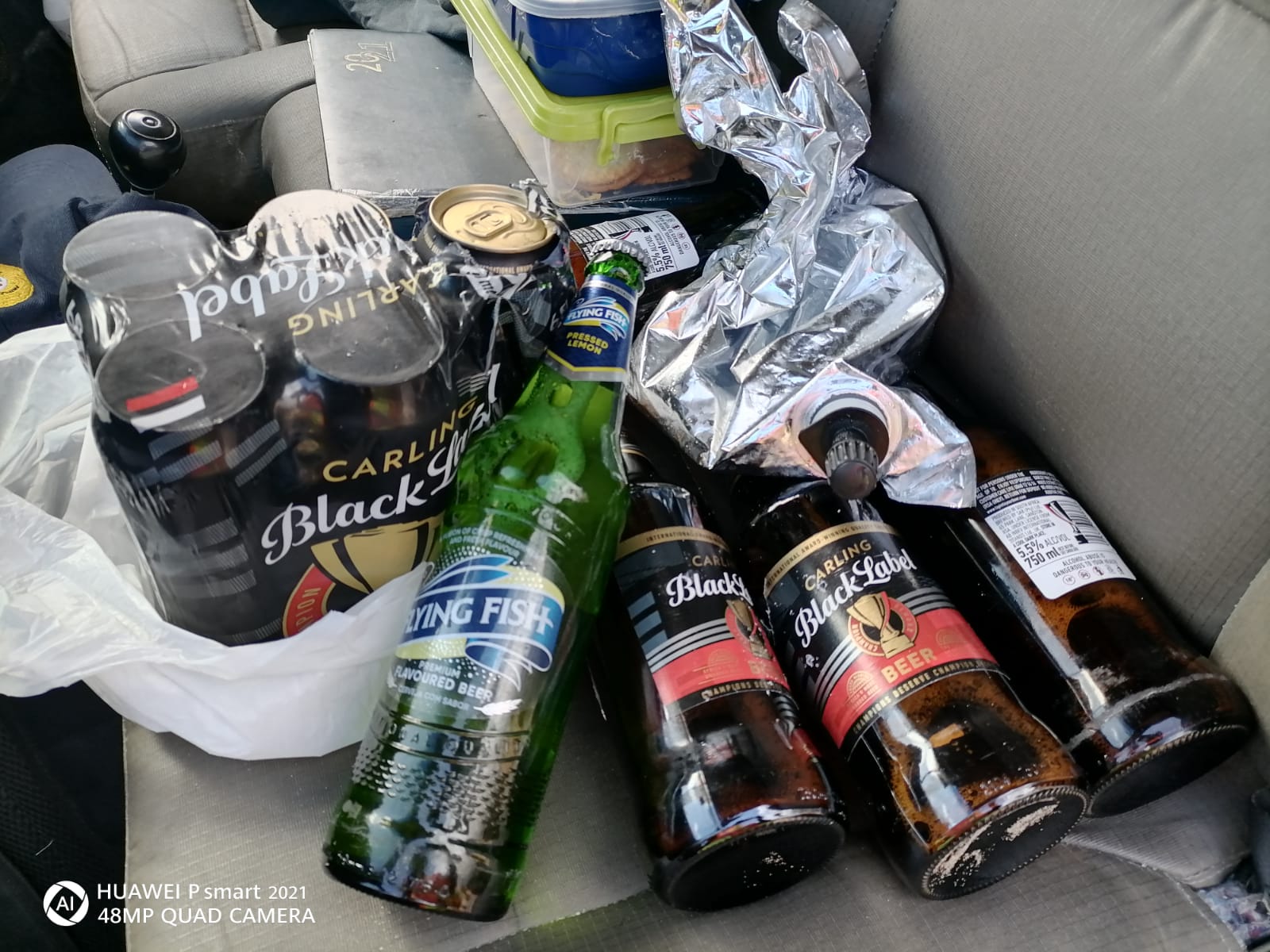
Some of the liquor that beachgoers tried to smuggle onto the beach areas.
According to Richard von Willingh, Law Enforcement Chief, people tried to bring a total of 332.3 litres of various kinds of liquor to the approximate value of R10 129 onto the beaches yesterday, Sunday, 19 December 2021. Alcohol would have been confiscated if the offenders did not leave the beach area.Beachgoers should take note that NO DRINKING is allowed at beaches, any open space, car parks, in or outside vehicles at these places. Law Enforcement has NO TOLERANCE for any person who wants to enter the beach areas under the influence of alcohol, try to enter the beaches with liquor, or use alcohol at beaches.Von Willingh said, “We will not hesitate to prosecute people and or confiscate their liquor if they do not comply with the municipal by-laws.”George Municipality will strictly enforce its no alcohol allowed on our beaches policy. The Municipality appointed 30 Beach Monitors to assist with beach patrols and bag searches.We encourage all beachgoers to assist our officials in ensuring that their day at the beach is a safe and pleasant experience. Neighbourhood Watches, Community Police Forums, George Traffic Services, Provincial Traffic Services as well as SAPS also work closely with the Municipality with regards to Community Safety.Alcohol is strictly prohibited on all beach areas under the control of the George Municipality which include Herold’s Bay, Gwaiing River Mouth, Victoria Bay, Wilderness, and Leentjiesklip areas.

Dogs on beaches (sand area) detrimental to Blue Flag status

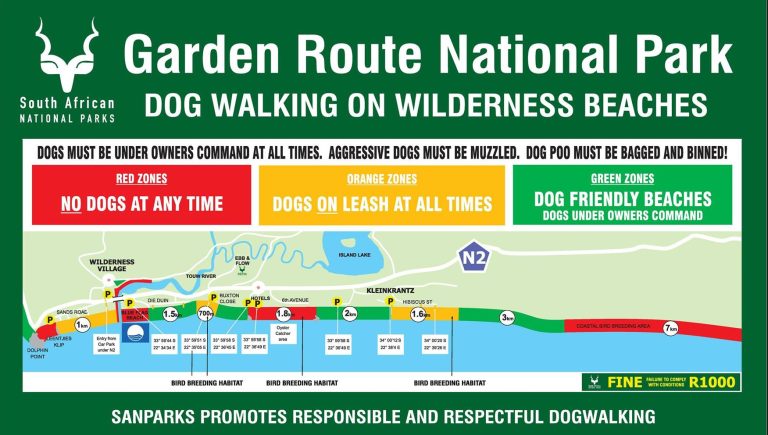
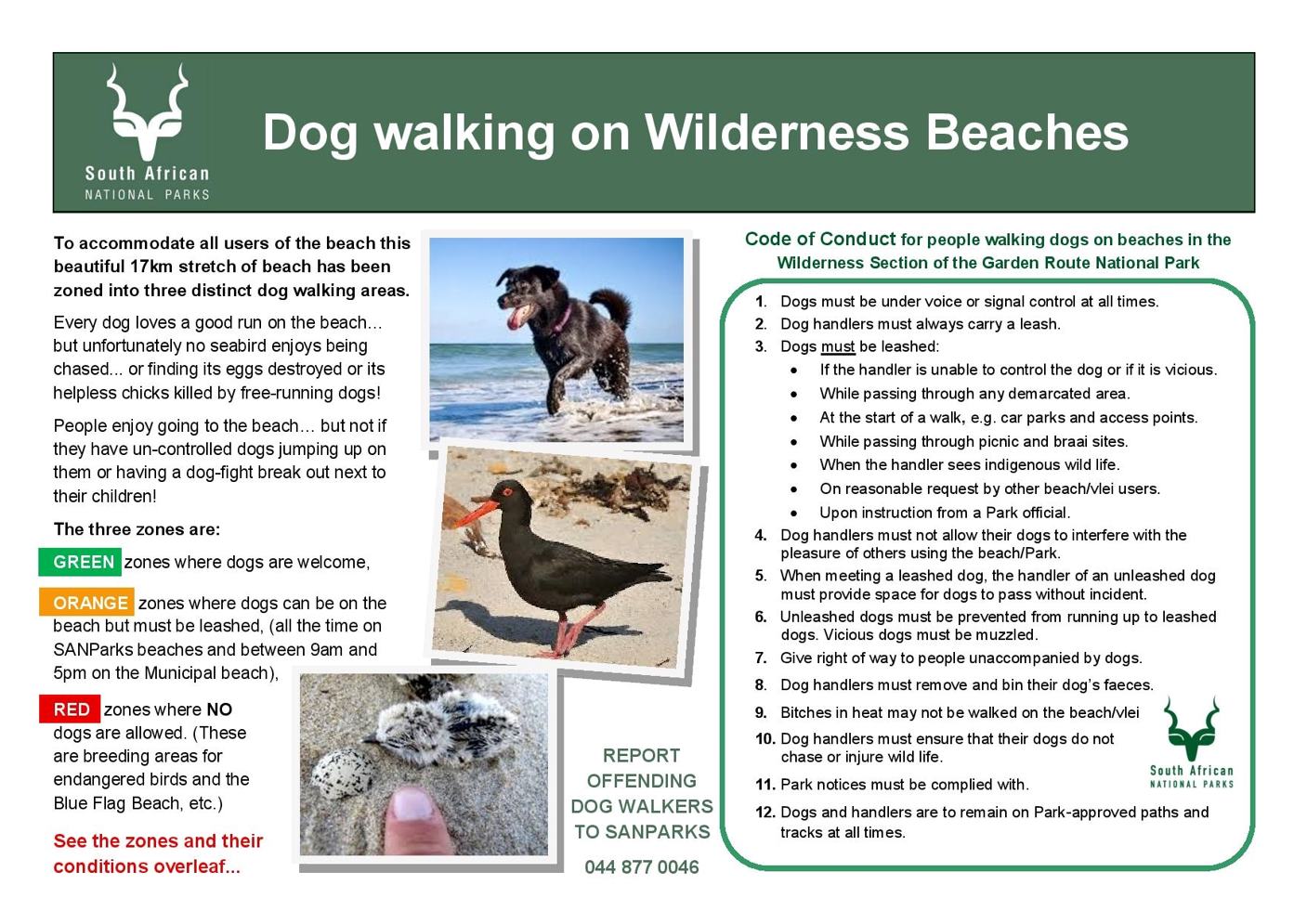
Issued by George Municipality 20 December 2021George Municipality wishes to inform all dog owners that for us to adhere to the Blue Flag international standards at all our beaches, it is imperative to enforce strict rules of NO DOGS ON BEACHES  (SAND AREAS) that is in line with the Municipality’s By-law, Keeping of dogs, cats and animals.Dog excrement can contaminate the water and jeopardise the Blue Flag status of our beaches-even if the dog poop is picked up.Dog owners are therefore warned to keep dogs on a leash and off the sandy areas at the beaches. Law Enforcement officers will not hesitate to act against those that do not adhere to the By-law.Wilderness Beach has full Blue Flag status and Victoria Bay and Herold’s Bay both gained Pilot status. Blue Flag is an international coastal management programme that accredits beaches that meet standards of excellence in water quality, environmental management, environmental education and information as well as safety and services. In South Africa the programme is implemented by the Wildlife Environmental Society of South Africa (WESSA).Blue Flag beaches promote tourism which stimulates the economy and assist with job creation. The status offers many benefits including improved tourism facilities, enhanced management of coastal ecosystems, increased awareness of the coast and capacity building of coastal municipalities as well as carrying significant international merit.Further to this By-Law no dog or other animal may be in any public street or public space (any open public space the public has access to which falls under the George Municipal jurisdiction for example beachfronts, parks, sport fields and sidewalks) except on a leash and under control. This is unless the animal is in an area designated by the George Municipality as a free-running area. A person is not allowed to walk a dog other than a guide dog, ON A BEACHFRONT, a public street, public place, without carrying enough plastic or paper bags or wrappers, to place the excrement of the dog into, in the event of the dog defecating.Please note that dogs are allowed on the sidewalk areas, (tarred, brick-paved etc.) of beachfronts, if these conditions are adhered to. The beach areas under the control of the George Municipality includes Herold’s Bay, Gwaiing River Mouth, Victoria Bay and the Leentjiesklip areas.The public must also note that By-laws relating to dogs on a street or public place relate to the George Municipal jurisdiction and it might differ from other municipalities. The public is also requested to humanely muzzle and keep dogs under control, which could be considered dangerous, vicious or ferocious. No animals should be left in an unattended and or a closed vehicle or open bakkie in any public street or space. If this by-law is not adhered to, a fine of R1000 will be imposed.Mr Richard von Willingh, Manager Law Enforcement at George Municipality, requests that animal owners leaving on vacation have their animals cared for by a reliable person or at an animal boarding facility such as kennels or catteries.We ask dog owners to familiarise themselves with a map of Sanparks attached, to see where dogs are allowed on beaches and where not.

What Is Light Pollution

Light pollution is a growing worldwide problem which affects vast areas of the earth. In a nutshell, Light Pollution is misdirected or misused light… generally resulting from an inappropriate application of outdoor lighting products. Light Pollution comes in several flavors… each with its own negative effects. These are…Sky Glow: light wastefully escaping into the night sky and causing a glow over urban/suburban areas.Glare: light shining dangerously out into people’s eyes as they walk or drive by.Light Trespass: unwanted light shining onto a neighbor’s property or into their home.Why should I care?Light pollution impacts us all… in many ways. Some of these are quite obvious, others are much less obvious. For starters….Light pollution wastes billions of dollars annually in the United States. 5 to 10 billion depending on whose numbers you want to use.Light pollution wastes incredible amounts of valuable natural resources. Hundreds of millions of barrels of oil… and hundreds of millions of tons of coal… just so people can light the bottoms of clouds?Light pollution pollutes the air we breath through needless generation of electricity (most of which comes from fossil fuels). See the previous comment about burning oil & coal. Air pollution is a serious problem that affects large segments of the population.Light pollution harms nocturnal wildlife. Many species won’t even go near an area that has bad lighting. Also, many species will simply stop reproducing if habitat destruction from overly bright lights becomes too severe. Light Pollution currently threatens all Florida Sea Turtles.Light pollution harms humankind, being linked to some serious ailments, including breast cancer. This is for real! This can be thought of as second hand smoke in the 1980’s. Researchers were just starting to look into the effects of second hand smoke back then. Many people laughed at the idea that one person could smoke… and another person could be harmed. Today, we know that this is in fact the case.Light pollution destroys the views of the heavens that man has enjoyed since the beginning of time. 90% of all American live under skies that are “affected” by light pollution… while roughly half can not see the Milky Way from their homes. This is a shame. Mankind has throughout history looked to the stars to try to understand events around them

5 Basic Copywriting Tips to Get More Readers

Research! The first thing you should do is do some research.You should know what kind of article you want to publish, what impact you want to achieve, how long it will take, and what kind of audience you will be targeting. You need to have an understanding of the basics of how to write an article. This will save you time and money and help you to write with confidence.Research is the absolute best thing you can do before writing. Depending on what your topic is, it can take up to half a day to research a topic, especially if you are trying to write about a wide variety of topics. The best way to learn everything you need to know about how to write is to read other successful writers, journos, marketers and business owners.Spend a lot of time watching what they do and try to model their approach. Use examples from your industry to see how you can apply things to your product or services. Look at successful writers and find out what they do to get the results they want.Once you have done the research, it is time to start planning. If you are targeting a local audience, then you need to come up with a unique selling story. Your article needs to tell the story so that you will be memorable to your reader. You should think about what kind of experiences your readers might have had with you and how you can impact their situation and help solve their problems.You should think about why your readers will remember your story over others. One example of this is how you can use interviews and testimonials. A good testimonial interview can be genuine and believable. You can also use a video or picture to reinforce the story. A great tip is to provide some links to some of the testimonials that people have left.When you are starting, remember that it takes more than just words to make a good article. It takes a plan to get started and you need to know how to create a plan before you ever begin. Keep these 5 basic copywriting rules in mind and you will soon be on your way to increasing your sales and profits.Remember to publish your story here!


No fireworks

Issued George Mun, 6th December 2021Due to its associated fire risks the private use of fireworks, pyrotechnics and crackers are not allowed anywhere in the George Municipal Area at any time.Trading in fireworks is illegal and will be confiscated. Fines may apply.Please report the illegal setting off of fireworks to 044 801 6350 or after hours at 044 801 6300. Please report the illegal trade in fireworks to 044 801 6350 or after hours at 044 801 6300.FIRE EMERGENCIES: 044 801 6311

NSRI’s safety tips

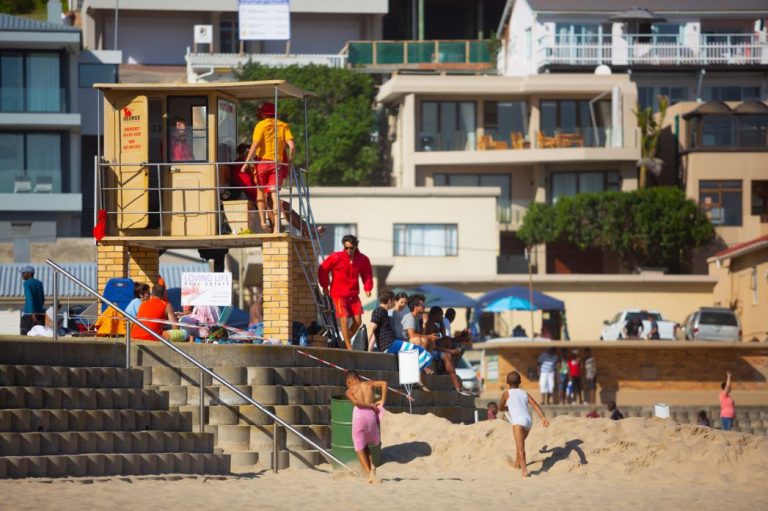
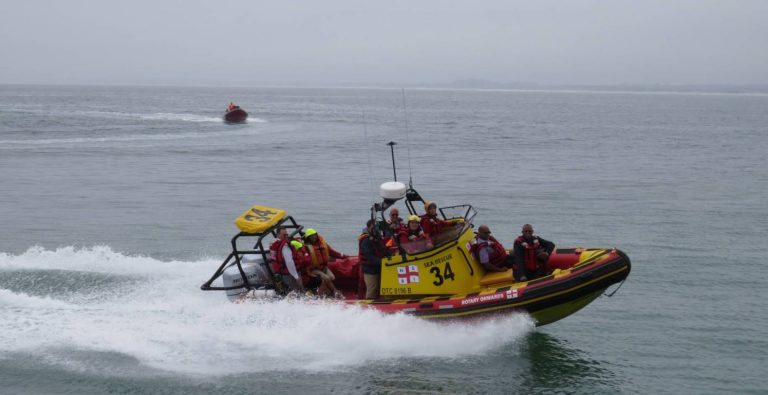
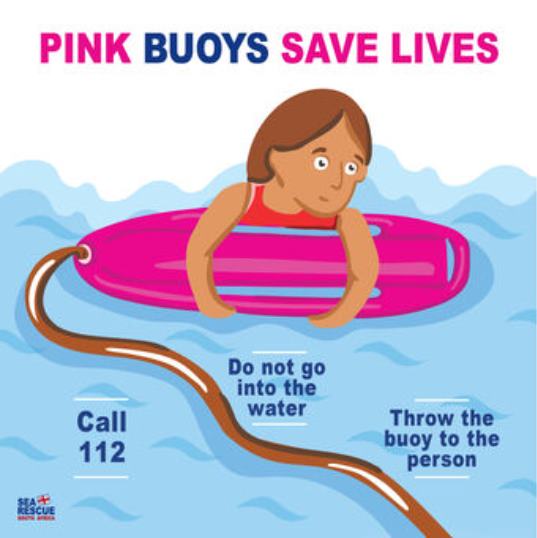
It is summer holiday and time for everybody to flock to the sea again. Here is an article by the NSRI on safety while enjoying the sea. The NSRI wishes everyone a safe summer holiday and we urge the public to adopt a water safety mindset around coastal and inland waters. Our rule number one, for a safe experience at the beach, is to choose a beach that has lifeguards on duty and to swim between their flags. If you do that, you don’t need to worry about rip currents, or suddenly getting out of your depth. Putting an arm in the air and waving for help will get a rapid response from the lifeguards on duty. Unfortunately, for various reasons, people regularly swim where there are no lifeguards on duty. This may be on a beach before or after the lifeguard’s duty for the day or at a beach that does not have Lifeguards. This is when things can go wrong. In a typical scenario Sea Rescue gets an emergency call for a swimmer in difficulty and, when we get there, we find two or more people in danger of drowning. Tragically, sometimes we are not able to get there in time and someone drowns. Often the person who does not survive is the kind person who went into the water to try and help a person who was in difficulty. Because this happens so frequently, Sea Rescue launched our Pink Rescue Buoy project in November 2017.  These bright Pink Rescue Buoys are hung on strategically placed signs and we hope that they will remind people to take care when entering water – and not to swim if lifeguards are not on duty at that stretch of the beach. If there is an incident and someone needs help these buoys can be thrown to the person in trouble in the water, providing them with emergency flotation.  There are clear graphics on the sign which explain how to use the Rescue Buoy. And most importantly, the emergency number for the closest Sea Rescue station is printed on the sign. If anyone decides, against advice, to enter the water to try to rescue someone in trouble first call Sea Rescue and then use the Pink Rescue Buoy to provide flotation for that good Samaritan as well as for the casualty. Have a plan in place in the event of an emergency to prevent panic:
  • Make sure you have emergency numbers that you may need saved in your cell phone. Dial 112 from any cell phone in any emergency. Or simply Google Sea Rescue or NSRI for the closest Sea Rescue station’s telephone number.
  • Check the wind, weather and tides before going to the beach, fishing or boating.
  • Tell someone where you are going and when you are due back, and make sure that they know your route, your intentions and who to call if you are overdue.
  • When climbing on rocks or fishing from rocks – never ever turn your back on the sea and we strongly advise rock anglers to wear a life-jacket and know when spring high tide is.
  • If you are paddling or if you are on a boat, before you launch, download and always use NSRI’s free SafeTrx app – http://www.nsri.org.za/safetrx
Here are some safety tips to bear in mind this summer:
  1. Swim at beaches where and when lifeguards are on duty.Lifeguards are on duty at selected beaches between 10am and 6pm on weekends and during the week during summer school holidays. Listen to their advice and talk to them about safety on the beach that you are visiting. They are the experts on that beach. If lifeguards are not on duty do not swim.
  2. Swim between the lifeguard’s flags.Teach children that if they swim between the lifeguards flags the lifeguards will be watching them and can help if there is a problem. Lifeguards watch swimmers very carefully between the flags – just wave an arm if you need help.
  3. Don’t drink alcohol and then swim.
  4. Don’t swim alone. Always swim with a buddy.If you are with a buddy while swimming there is someone who can call for help if you need it and you can’t wave to the lifeguards or call for help yourself.
  5. Adult supervision and barriers to water are vital.Adults who are supervising children in or near water must be able to swim. This is vital if it is at a water body that does not have lifeguards on duty. It is extremely dangerous to get into the water to rescue someone so rather throw something that floats to the person in difficulty and call for help (112 from a cell phone and check for the nearest Sea Rescue station telephone number before you visit a beach – put that number into your cell phone). Children should not be able to get through or over barriers such as pool fences to water. Only use child safe pool fences and child safe pool covers or nets.
  6. Know how to survive rip currents.If you swim between the lifeguard flags they will make sure that you are safe and well away from rip currents. If for some reason this is not possible do not swim. Educate yourself about rip currents, there is plenty of educational material here http://www.nsri.org.za/2017/01/beware-of-rip-currents/ including videos of what rip currents look like.
  7. Don’t attempt a rescue yourself. Call a lifeguard or the NSRI by dialling 112 from your cell phone for help. If you see someone in difficulty call a lifeguard at once or dial the nearest Sea Rescue station from your cell phone. You should put this number into your phone before you go to the beach – get the emergency numbers for NSRI here http://www.nsri.org.za/emergency-numbers/ or you can Google for the closest NSRI station emergency number. 112 is a good emergency number – for any emergency – to dial from your cell phone. After calling for help try and throw something that floats to the person in difficulty. A ball, a foam surf board and so on.
  8. Watch children who are using floating objects, toys or tire tubes at the beach or on dams very carefully. Never use these if the wind may blow them away from the shallow water.You can very quickly get blown away from the shore and as much fun as tubes and Styrofoam are it is easy to fall off them. If a child can’t swim and falls off in deep water they will drown.
  9. Do not be distracted by your cell phone or social media.While you are looking after children in or near water you need to focus on them and nothing else. Adults who are supervising children should not be distracted or use their cell phone. It is not possible to concentrate on children in the water and be on your phone at the same time.
  10. Learn how to do CPR. Have the emergency numbers saved in your phone.
  The original article can be found here. 

George Municipality still removing debris and logs from after flash floods Monday, 22 November 2021

Issued by George Municipality on 3 December 2021George Municipality has asked bathers to be vigilant when swimming in the sea along our coast as debris and logs are still washing up following the flash floods of Monday 22 November 2021. Large piles of debris and logs are still in the process of being removed from the beaches by our Community  Services personnel. According to Allen Paulse, Director of Community Services, personnel  and Working for the Coast workers have been clearing Herold’s Bay, Victoria Bay, Ballot’s Bay, Wilderness beach from Leentjiesklip to Selena’s beach, Gwaiing Beach and Kaaimans mouth on a daily basis.
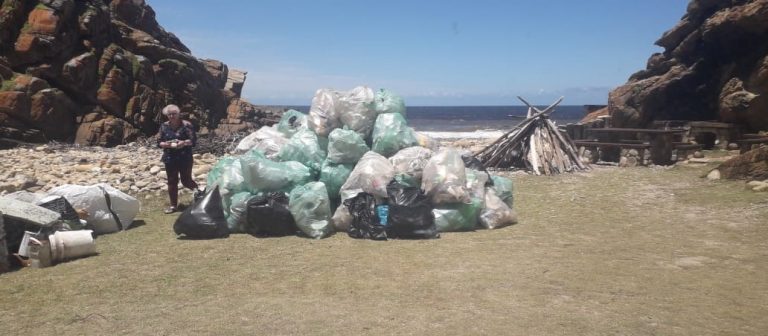
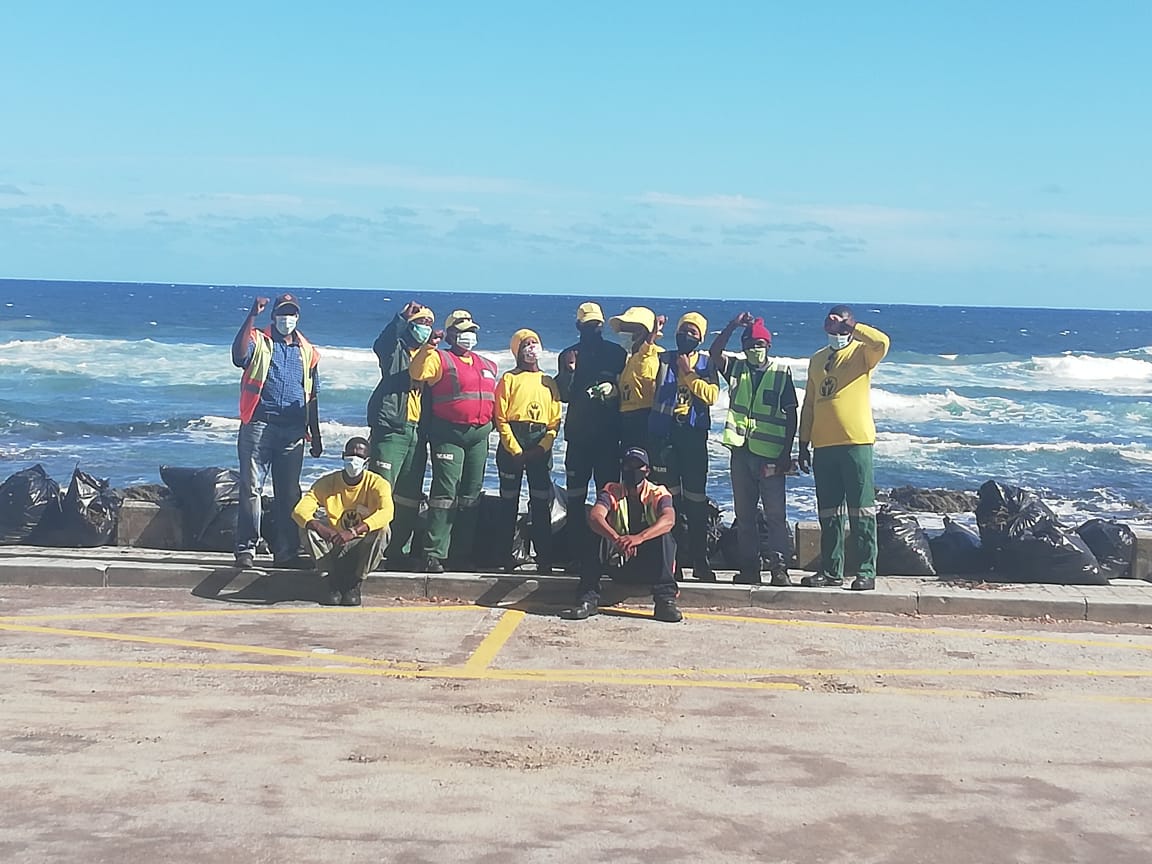
A team of Community Services workers and workers from Working for the Coast after a cleanup at Wilderness Beach.
Due to the tides, there is still debris washing up and because of high tides, certain areas can only be reached when it is low tide. During last week, 269 bags of debris was picked up at Ballot’s Bay. This week the crews collected to date,  62 bags of debris on Herold’s Bay beach and had to cut up huge logs that washed up as well.
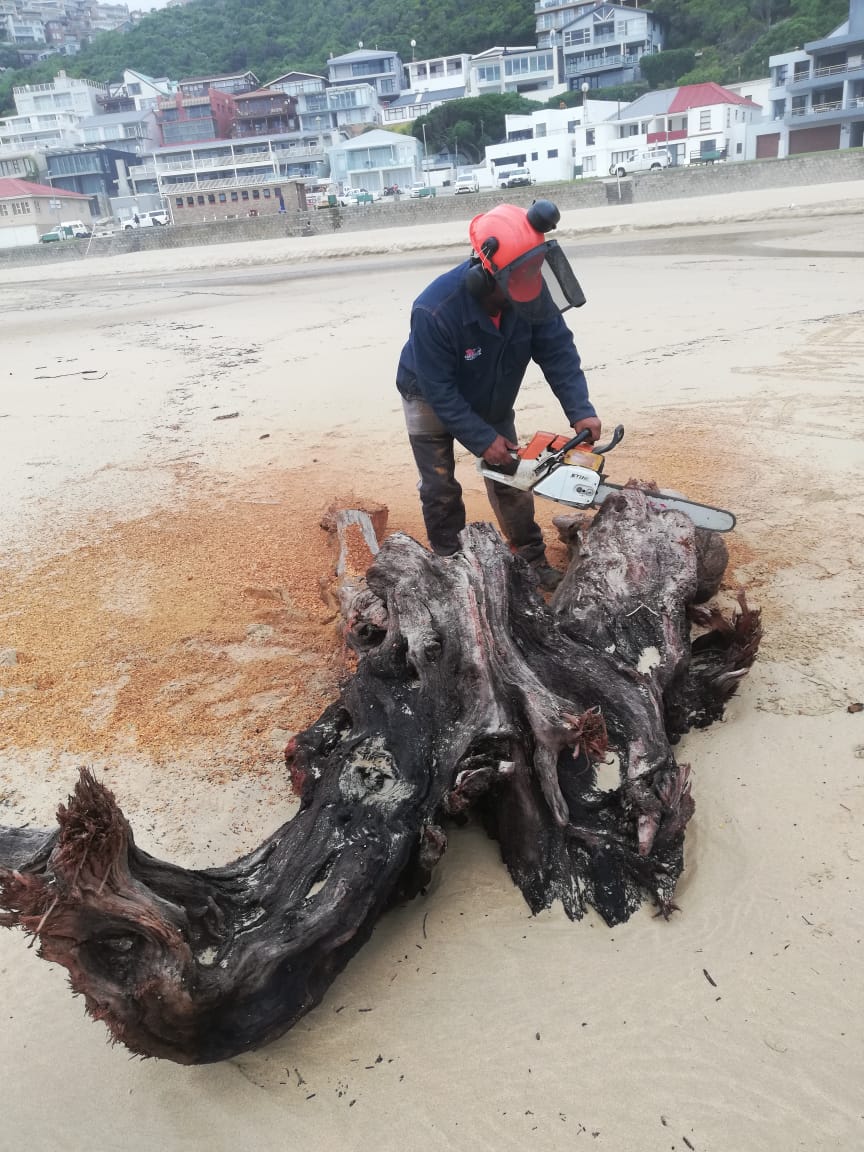
Herold’s Bay: A worker from Community Services cuts a log into smaller pieces with a chainsaw.
On 23 and 24 November the teams respectively picked up 211 and 220 bags at Herold’s Bay. At Gwaiing beach a total of 80 bags of debris were collected today, Friday, 3 December 2021 during low tide. The crews also walk up the river during low tide to clean up debris. At Wilderness the teams have picked up 320 bags of debris at Selena’s beachside on 1 December and another 215 bags at Leentjiesklip.
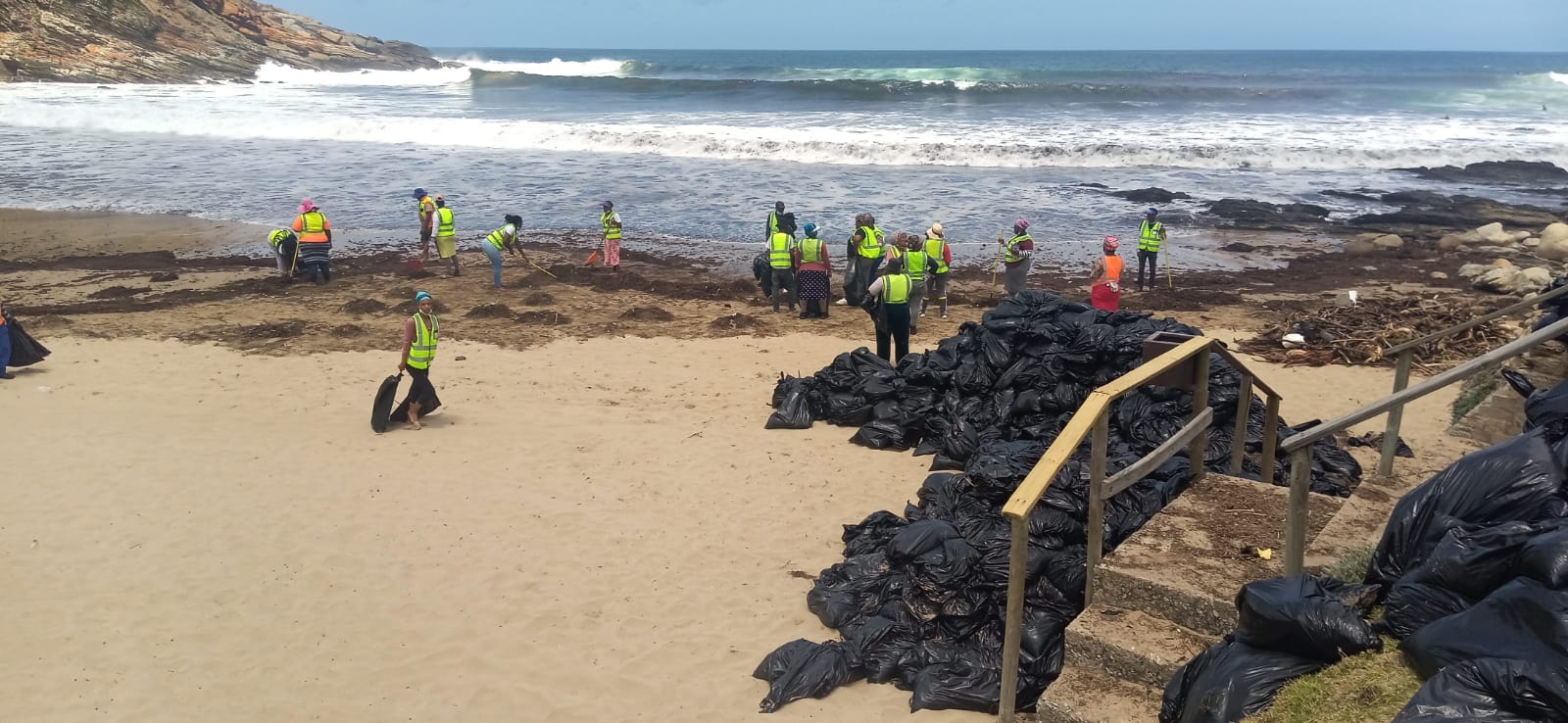
Bags and bags of debris picked up from Victoria Bay beach.
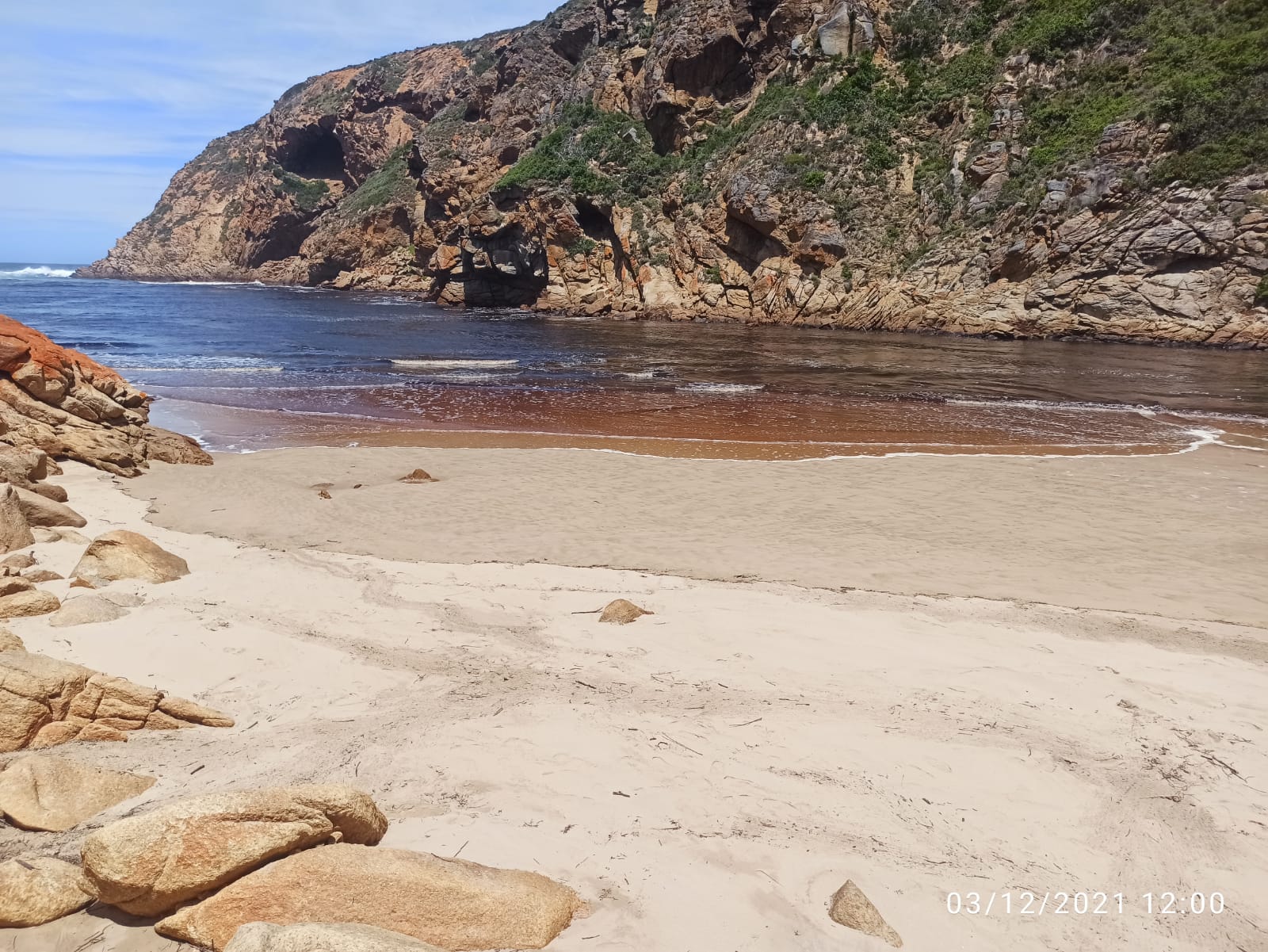
The beach looks spotless after the crews cleaned all the washed-up debris
Debra Sauer George Municipality Communications Officer 044 801 9181

Walk in your calling

I have discovered that one of the best ways to remain full of joy and peace, is to do what God has called me to do. Doing the purpose of God for my own life keeps me so occupied, I don’t have time to compare, judge, meddle in, analyze, or compete, with someone else’s life.
  • Run your own race (1 Corinthians 9:24-27)
  • Confess your own sins (James 5:16)
  • Love your own neighbor (Mark 12:31)
  • Mind your own business (1 Thessalonians 4:11)
  • Guard your own heart (Proverbs 4:23)
  • Build your own house (Matthew 7:24-27)
  • Renew your own mind (Roman’s 12:2)
  • Discipline your own body (1 Corinthians 9:27)
  • Tame your own tongue (James 3:8)
  • Plough your own field (Proverbs 20:4)
  • Protect your own eyes (Matthew 6:22)
  • Do your own good works (Ephesians 2:10)
  • Work out your own salvation (Philippians 2:12)
  • Dig your own well (Genesis 26:23-25)
  • Manage your own household (1 Timothy 3:4-5)
  • Pay attention to your own doctrine(l Tim 4:16)
by anonymous

Integrated approach to keep CBD clean and safe

George Municipality Protection and Community Services directorates have stepped up operations in the central business district to address impacts associated with vagrancy, homelessness, and illegal trading. Ongoing efforts include cooperation from other stakeholders including national and local government departments, SAPS, NGOs, welfare organisations, and local business.George Acting Municipal Manager Dr Michele Gratz said the state of the CBD was important for the socio-economic well-being of the city. “There is significant interest from outside business to invest in George, many of whom will start their research in the CBD, which is why it is important that it is clean and safe. Business investment brings job opportunities, which in turn may address some of the social issues on our streets.”“The municipality’s mandate for law enforcement and social services are limited as the bulk of these functions reside with SAPS and the national Department of Social Development. Municipal departments, however, have longstanding relationships with all relevant stakeholders and work with them continuously to collectively address these complex issues,” said Dr Gratz.George Municipality Acting Director Protection Services Vernon Petersen said it had recently restructured its shift system to extend patrolling hours for Law Enforcement and Anti-Land Invasion officers beyond normal working hours to increase visibility during times when homeless people settle in for the night and vagrants move in. “The extended hours and increased visibility have had a good overall impact. Offences linked to municipal bylaws such as littering, causing a nuisance, and urinating in public have as a result also decreased and there is a notable difference in the overall appearance of the CBD,” said Mr Petersen.Informal trading on sidewalks in the CBD is legislated, including an annual permit system, and Law Enforcement patrols there every weekday to ensure compliance to municipal bylaws.Community Services Director Allen Paulse said several sections in his directorate were directly and indirectly involved in the CBD initiative, most notably Cleansing, Parks and Recreation and Community Development. “Several street cleaning teams are focussed on the CBD and main arterials into the city while refuse removal regularly empty litter bins and identify possible illegal dumping spots for clearing and preventative actions.”“The municipality is grateful for support from especially neighbourhood watches to monitor problems associated with ‘sakkrappers’ (bag scratchers). As all people have rights to the freedom of movement and earning a living, this remains a complex matter for which we continue to explore holistic solutions.”“The Community Development department established a People Living on the Streets Committee in 2018 to address the many factors associated with vagrancy and the homeless. The committee meets monthly and includes representatives from George Municipality Community Services departments, SAPS, Kids Stop (street children), Cremhog (homeless adults), and national Departments of Social Development, Health, Labour and Internal Affairs.Community Development keeps a register of homeless people as a starting point to the possible reintroduction into society where possible. The municipal department also has a monthly outreach at night to identify new people or those who had returned to the streets after being reunited with family or society.People and organisations interested in getting involved in long-term, sustainable, holistic solutions to issues surrounding the homeless, vagrancy and illegal trading are invited to contact Community Development on 044 802 2000 during office hours.

Interview with a Tax Practitioner, Sharon Terblanche

In September we did an interview with a Tax Practitioner – and our Tax Workshop facilitator – Sharon Terblanche. Tax is a complicated topic for many people, so we wanted to sit down and chat to Sharon about her career as a Tax Practitioner, how she works with SARS and what advice she would give to taxpayers.Sharon began her career as a Tax Practitioner when SARS began it’s e-filing system. A few years later SARS required Tax Practitioners to join a governing body. Sharon then began studying tax and became more involved in taxation.Best and worst aspects of the job:When asked what she enjoys about her work, Sharon says that she enjoys working with figures and meeting all sorts of interesting people. Her least favourite part of the job is something we can all relate to in some sense: running into a dead end with SARS. Sharon says that occasionally when conversing with SARS she interacts with a person who cannot give her any relevant information regarding her query and she often has to phone again and again ,and wait in the SARS queue once more. She says that previously you could wait up to 60 minutes for your call to be answered, but that luckily these days SARS has a call back system which has made life easier.Interesting stories regarding SARS:“Apparently I have three arms… I spoke to one of the SARS agents who needed me to hold a letter in one hand, my ID in the other hand and with my third hand take a selfie. Now if she had said let someone else take a photo of you I would have understood, but the words selfie were specifically used.”Sharon says that most of her clients find it frustrating to talk to a SARS official, but that she tries to find the humor in the situation.“There was the time the SARS official kept talking about Cell C and in the end I asked him what he meant and all the time he was trying to say selfie and I kept hearing Cell C. We had a good laugh when I clicked ‘selfie’, and boy did I end up getting a lot of info from him just because I laughed about my own silliness.”Clearly Sharon can see the light side of any situation, no matter how frustrating! It seems like a sense of humor is an important quality to have when working in tax and finance.The Mastering It Tax Workshop:Sharon is our lovely Tax Workshop facilitator – happening on a monthly basis (check our Facebook event page!). She walks us through how to handle and approach tax, and helps to demystify the SARS website, literally step-by-step!When asked what motivated her to share her knowledge with others, she said:“I think everyone needs to have a better idea of how the income tax systems work, if only to decide I can do it myself or maybe to be reassured that it is better to have a professional help you.”Sharon left us with some of her top tax tips:
  • Keep all your expense slips electronically as till slips tend to fade.
  • Don’t try to take shortcuts, follow the letter of the law to avoid tax mishaps.
  • SARS does not accept “I did not know” as an excuse.
OUR NEXT TAX WORKSHOPS WILL BE HAPPENING – 16 and 23 November. Have a look at the Mastering It Facebook event page for more information!More about Mastering It here