



George, Western Cape — In municipalities across South Africa, a growing concern is emerging: the cost of silence. Civic leaders, watchdog groups, and community organisations are increasingly warning that when residents choose not to report problems, challenge misconduct, or participate in local governance, the consequences ripple far beyond individual inconvenience—they affect the entire community.
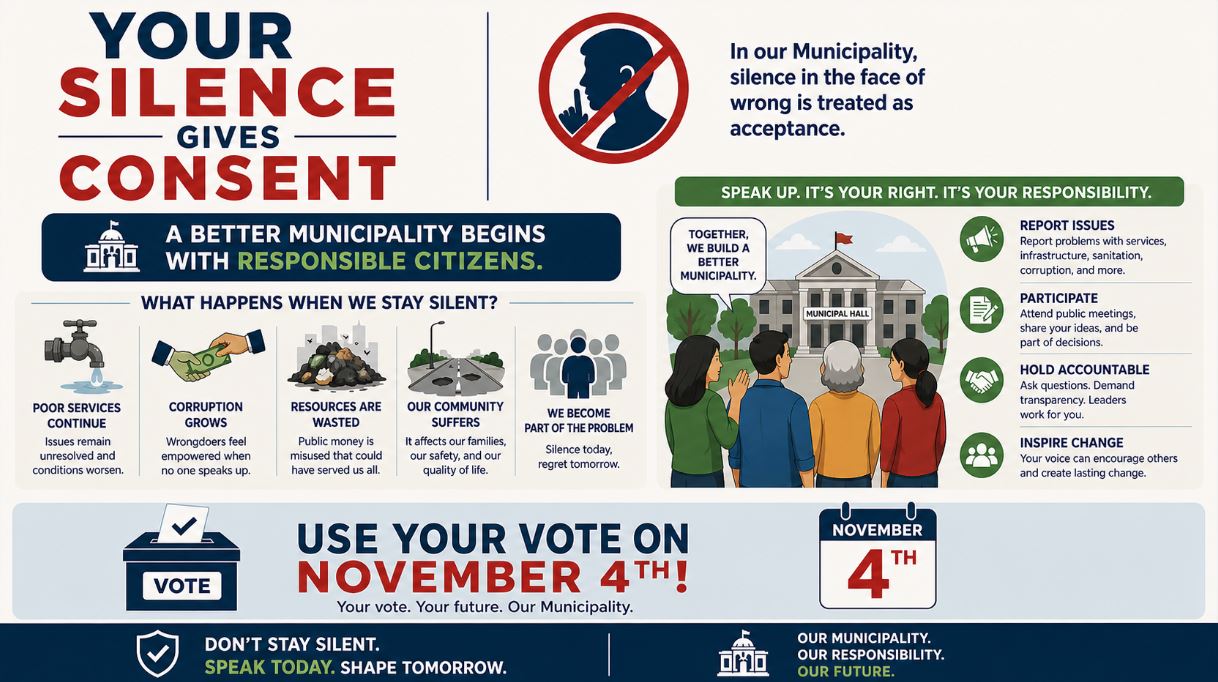
The phrase “your silence gives consent” is gaining traction in municipal awareness campaigns, highlighting a critical reality: failing to speak out against poor service delivery, corruption, or infrastructure decay allows these issues to persist unchecked.
A Culture of Quiet Endurance
Many residents have grown accustomed to tolerating problems such as potholes, water leaks, inconsistent waste collection, and even alleged corruption. Whether due to frustration, fear of retaliation, or a belief that “nothing will change,” this silence creates an environment where inefficiency and misconduct can thrive.
Municipal governance experts point out that public participation is not optional—it is a constitutional cornerstone. Ward meetings, public hearings, and reporting channels exist precisely so communities can hold local authorities accountable. When these mechanisms are underutilised, oversight weakens.
The Real Cost of Silence
The implications are both practical and systemic:
- Service delivery declines as faults go unreported and unresolved
- Corruption becomes entrenched when wrongdoing is not challenged
- Public funds are misused, impacting long-term development
- Community safety and wellbeing suffer
- Trust in local government erodes, leading to further disengagement
“Silence creates a vacuum where accountability should be,” says a local civic activist. “And that vacuum is often filled by inefficiency or worse.”
Speaking Up: A Civic Responsibility
Municipalities are increasingly encouraging residents to take ownership of their communities by:
- Reporting faults and service issues
- Attending ward committee and council meetings
- Engaging in public consultations
- Using official complaint channels
- Participating in local elections
These actions are not merely rights—they are responsibilities that directly influence the quality of governance.
The Ballot as a Voice
With local government elections approaching on 4 November, the message is becoming more urgent: voting is one of the most powerful ways citizens can express approval or demand change.
Elections offer a formal mechanism for accountability, allowing communities to reward effective leadership or replace those who fail to deliver. However, voter turnout in municipal elections has historically been lower than in national elections, raising concerns about representativeness.
A Call to Action
Community leaders are clear: silence is no longer neutral—it has consequences.
“Every unreported issue, every unattended meeting, every skipped vote contributes to the status quo,” says a municipal governance analyst. “If residents want better services, transparency, and development, they must actively participate.”
As municipalities face increasing pressure to deliver under constrained resources, the role of citizens becomes even more critical. The future of local governance may well depend not only on elected officials—but on whether communities choose to remain silent or speak up.